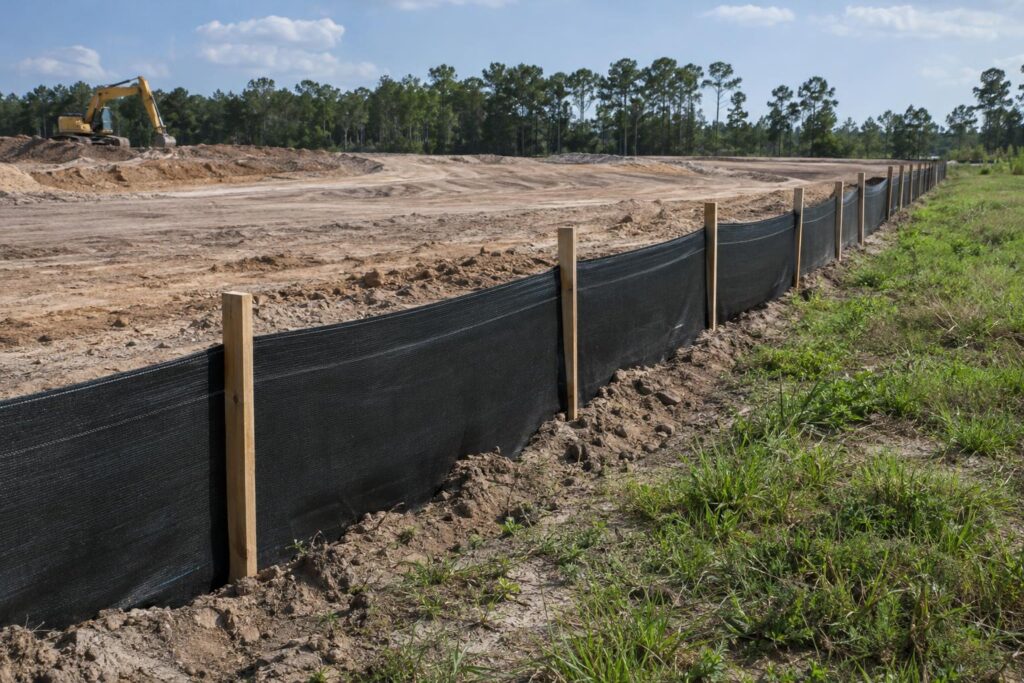
Silt fence is a common sediment barrier on construction sites, and EPA notes that many fences do not work well because they are not well designed, installed or maintained. Fabric that’s stapled to a few stakes and laid on top of the ground looks like a barrier from the road, then lets the first heavy rain carry soil into the street. Proper silt fence installation is mostly about layout, burial depth and compaction, and the fabric choice matters less than where and how the fence is set.
This guide covers how to place, install and maintain silt fence on commercial and public sites, using the EPA’s published guidance and Florida’s permit requirements. Your plans, permit conditions and local standards control the final details.
Silt Fence Installation Starts With Layout
EPA’s silt fence fact sheet puts it plainly: where a fence starts, runs and ends is critical to how well it works. A fence that doesn’t pond water doesn’t trap sediment, and the water finds the low point or runs around the end.
Follow the contour
Place the fence along the contour, not up and down a slope. EPA says the drainage area above any fence should usually not exceed a quarter of an acre, and that water flowing over the top during a normal rainfall means the drainage area is too large. Long, straight runs concentrate water at one low spot, so the fact sheet recommends J-hooks, which turn the ends up the slope to break a long run into several storage areas.
Turn the ends up
The bottom of each end of the fence should sit higher than the top of the middle. In an unusually heavy rain, water then flows over the top rather than around the ends, and only fine suspended material spills over. EPA also says not to place a fence in a channel with continuous flow, because a silt fence is a perimeter practice, not a dam.
Count the footage
EPA gives a rule of thumb of at least 100 feet of silt fence per 10,000 square feet of disturbed area. It’s a starting point, not a Florida standard, since soil, slope, rainfall and site layout all change the answer. If a fence overflows after a moderate rainfall, the fact sheet says the site probably needs more of it.
Trenching In: Slicing, Trenching and Posts
Most silt fence failures happen below ground. Water that gets under the fabric undercuts the barrier and washes the stored sediment out, which is why the burial and compaction details deserve the attention.
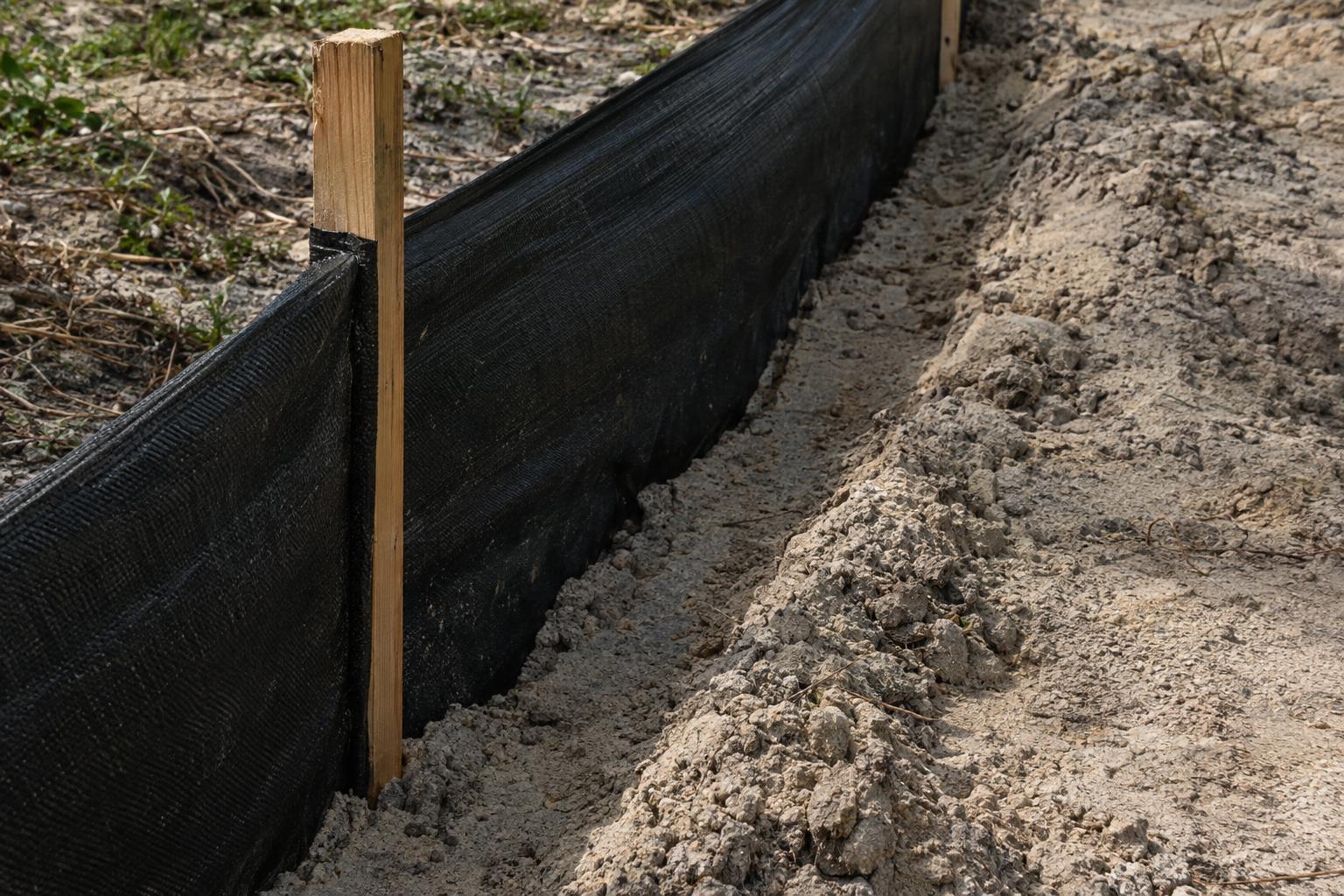
EPA describes two common methods. In static slicing, a machine pulls a narrow blade through the ground to create a slit 12 inches deep and inserts the fabric as it goes. Crews then roll a tractor wheel along both sides of the slit 2 to 4 times to compact the soil. In trenching, a machine digs a trench about 6 inches wide with a 6-inch excavation, the fabric goes in and the trench is backfilled and compacted.
The fact sheet cites an independent evaluation in which static slicing performed better than the two lower levels of the trenching method and as well as or better than the best one. The best trenching method typically took nearly triple the time and effort. Either way, compaction on both sides of the fabric is what keeps water from tunneling underneath.
Posts and fabric
EPA recommends posts driven 2 feet into the ground to hold 2 feet of sediment and water, and says steel posts are best because they can be driven into compacted soil to that depth. Spacing is 3-4 feet where water may run over the top of the fence, 5 feet in most other areas, and 6-7 feet where there isn’t a considerable horizontal load. A lightweight fabric tends to tear where it’s attached to the posts, so use a heavier porous fabric and attach it securely. The fence should be able to support 24 inches of sediment and water.
Inlets, Slopes and Other Trouble Spots
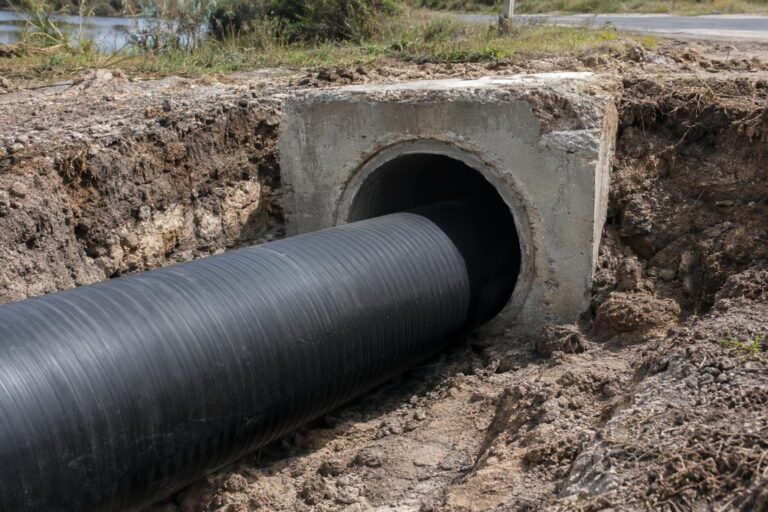
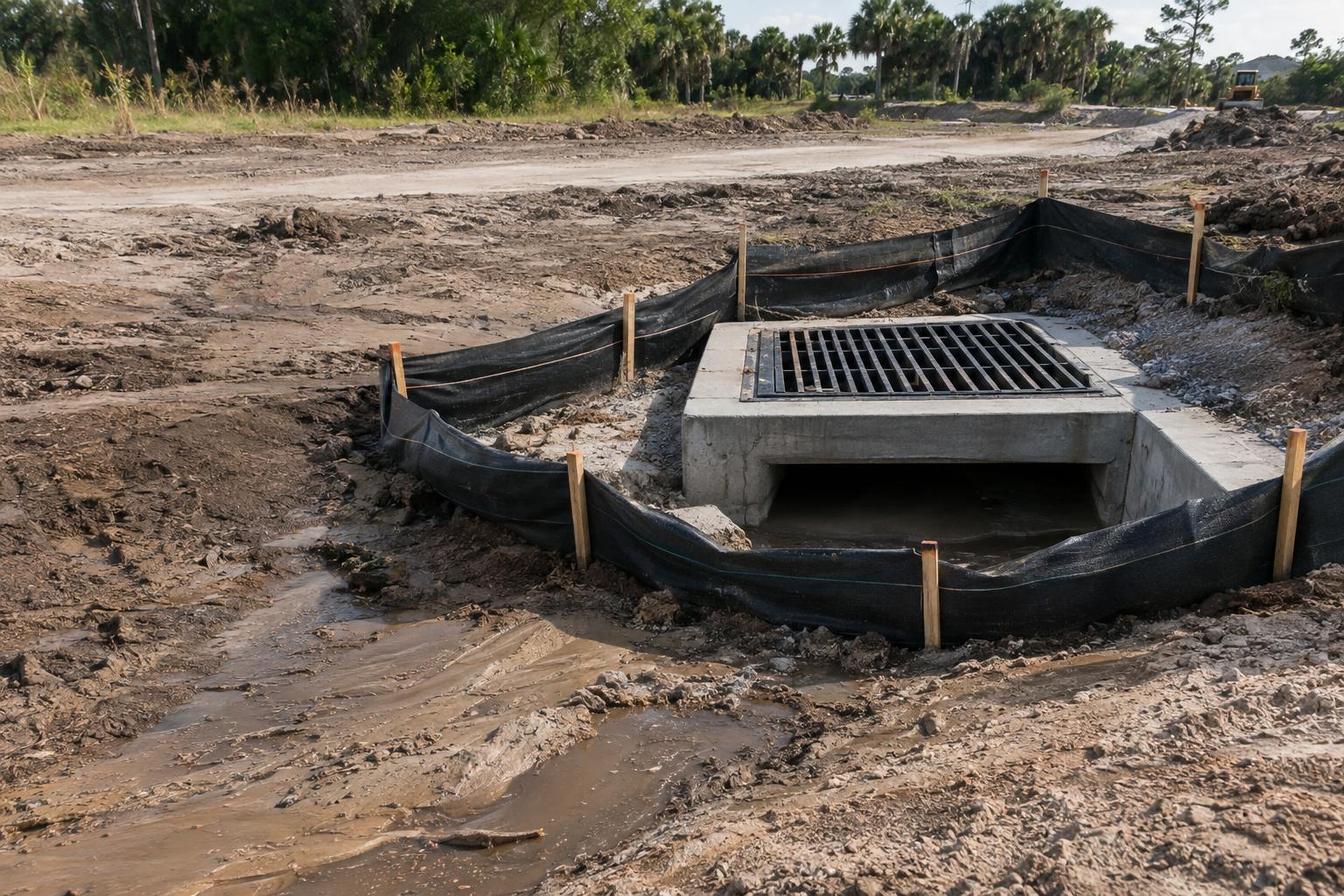
Perimeters get the attention, but storm inlets and unpaved streets are where sediment does the most harm. EPA says to install silt fence on the inlet side of a storm sewer or culvert, not at the discharge, where there’s more velocity and less storage area. It also notes that streets cut to grade but not yet paved are prime erosion pathways and need a containment barrier if paving is not coming soon.
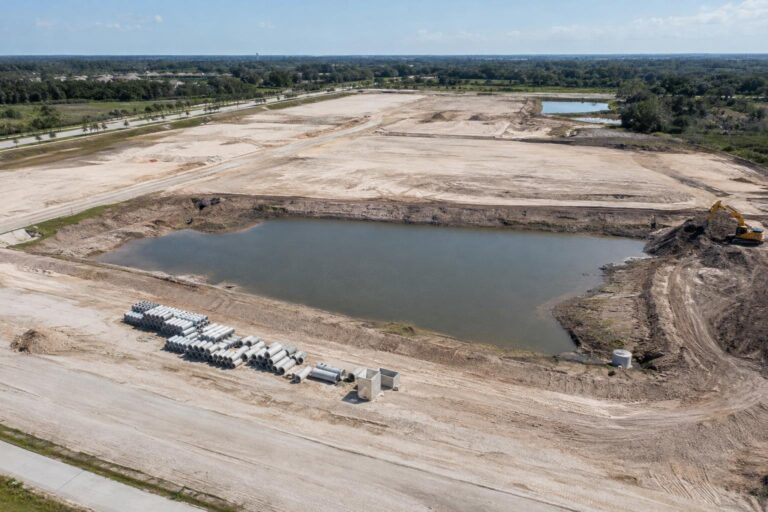
On a long slope, EPA suggests one fence near the head of the slope to reduce the volume and velocity of water, and another 6-10 feet from the toe to create a sediment storage area. Silt fence is also a last line of defense. The fact sheet says designers and contractors should consider diverting sediment-laden stormwater to a sediment detention pond or other primary control, which is usually where drainage design and erosion control meet. Our drainage crews build those structures along with the pipe and inlets they serve.
What Florida Requires and What Inspectors Look For
In Florida, the Department of Environmental Protection runs the stormwater program for construction sites. The DEP construction generic permit states that silt fences or equivalent structural controls are required for all side slope and down slope boundaries of the construction area. It also requires inspections at least once every seven calendar days and within 24 hours of the end of a storm event that is 0.50 inches or greater, and the inspector must be qualified. The department has noted that it is proposing updates to the permit, so read the version your project is covered under.
An inspector walking the site will usually look for:
- Burial and compaction
- Fabric in the ground, not lying on it, with firm soil on both sides.
- Posts and attachment
- Upright posts, intact ties or staples, no sagging between posts.
- Placement
- Fence along the contour, with ends turned up, and no flow bypassing the ends.
- Sediment levels
- Deposits that have built up behind the fabric.
- Damage
- Tears, gaps, or sections run over by equipment.
Maintenance and removal
EPA says to inspect silt fence routinely and after precipitation events. The ASTM practice it cites recommends removing sediment when deposits reach half the height of the fence, or installing a second fence. Once the site is stabilized, the fence comes out, and the area can be seeded and mulched. Florida’s permit also says to initiate stabilization measures within 7 calendar days after construction activities have ceased on any portion of the site.
On our own jobs, silt fence is part of the erosion and sediment control work we perform as part of site development, installed to the plans and kept in place until the ground is stable. If you want the installation priced with the earthwork, send the erosion control sheet and permit conditions with your bid invitation.
The figures above come from the EPA silt fences fact sheet, which also pairs its guidance with photographs of good and poor installations. It carries its own note that state or local requirements may apply, so treat its numbers as guidance and your contract documents as the rule.
Frequently asked questions about silt fence installation
How deep should a silt fence be installed?
EPA describes a slit 12 inches deep for the static slicing method, and a trench about 6 inches wide with a 6-inch excavation for the trenching method. The posts go 2 feet into the ground. Your plans or the local standard may require something different, and they control.
What’s the proper way to install a silt fence?
Place it along the contour, turn the ends up the slope, bury the fabric, compact the soil on both sides, drive the posts to depth and attach the fabric firmly. Then inspect it after rain and clear or add fence as sediment builds up.
Will silt fence let water through?
Yes, slowly. EPA describes silt fence as a temporary sediment barrier made of porous fabric that ponds sediment-laden stormwater so the sediment settles out. If the fabric clogs or the drainage area is too large, water goes over the top instead.
What affects the cost of silt fence installation?
Footage, soil conditions, access, the installation method, post type and how long the fence must stay in place all shape the price. Reinforced fence costs more than standard fence, and removal at the end belongs in the scope. We price from the plans, not by the foot over the phone.
Call (239) 841-6400 or invite V&H to bid and include the erosion control sheet, so the perimeter controls are priced and scheduled with the earthwork they protect.