Before a pad can be graded or a pipe laid, somebody has to take the existing site apart. On commercial, public and development work, that first step is clearing and grubbing, and it’s where a lot of scope gaps start. A bid package that says “clear the site” without saying how deep, how far or what stays can produce three very different prices.
This guide explains what each step covers, how Florida’s DOT writes the requirement, and what your plans and specifications should settle before anyone prices the work. It’s written for project managers, developers and public works staff who have to scope this item, not for owners clearing a backyard lot.
Clearing and Grubbing: Above the Ground and Below It
The two words describe two different layers of the same job. Clearing deals with everything standing on or lying on the surface. Grubbing deals with what’s left in the soil once the surface is cleaned up.
What clearing removes
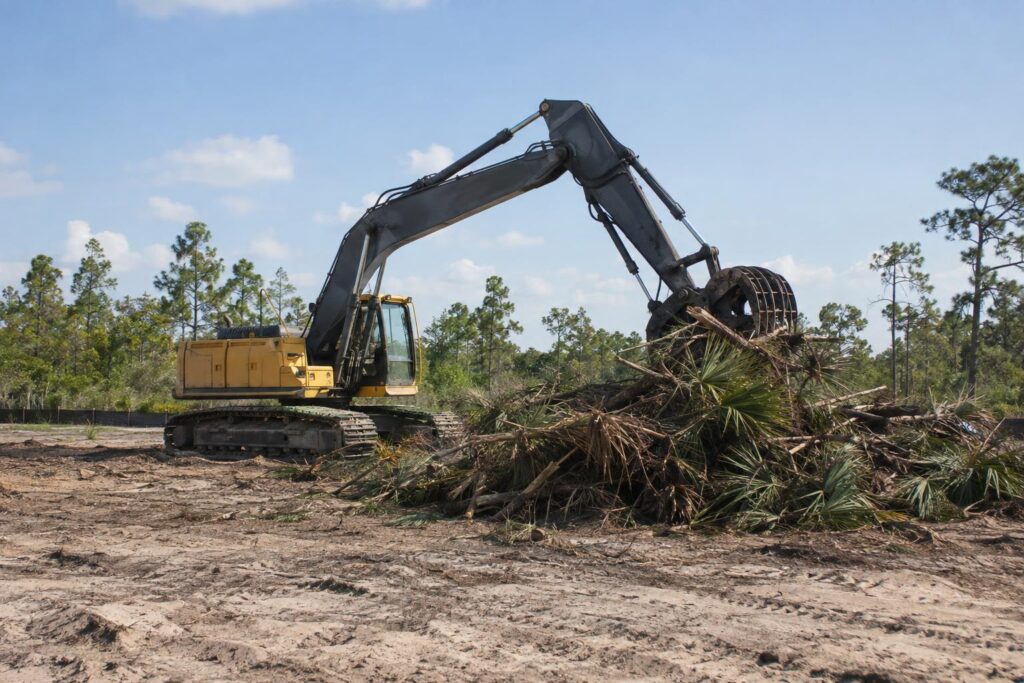
Clearing takes out trees, brush, vines, fences, debris and anything else that sits above grade inside the limits shown on the plans. On a Southwest Florida site that usually means pine, palmetto, scrub oak, melaleuca and other exotics, plus old fencing and the odd abandoned structure. Equipment is typically a tracked excavator with a rake or thumb, sometimes a dozer, and a plan for where the material goes.
Most specifications also tell the crew what to do with the material. Merchantable timber, chips, stumps and brush each have their own handling, and the contract documents say whether the contractor owns it or the owner keeps it.
Clearing is also where protected trees come in. If the plans mark trees or natural areas to stay, the crew works around them, and the barrier that protects them needs to go up before heavy equipment arrives.
What grubbing removes
Grubbing digs out the stumps, root masses and buried debris that would otherwise rot, settle or interfere with fill and compaction. Leave a large stump under a building pad and it can leave a void or soft spot later. That’s why grubbing, not clearing, is the part that has depth requirements.
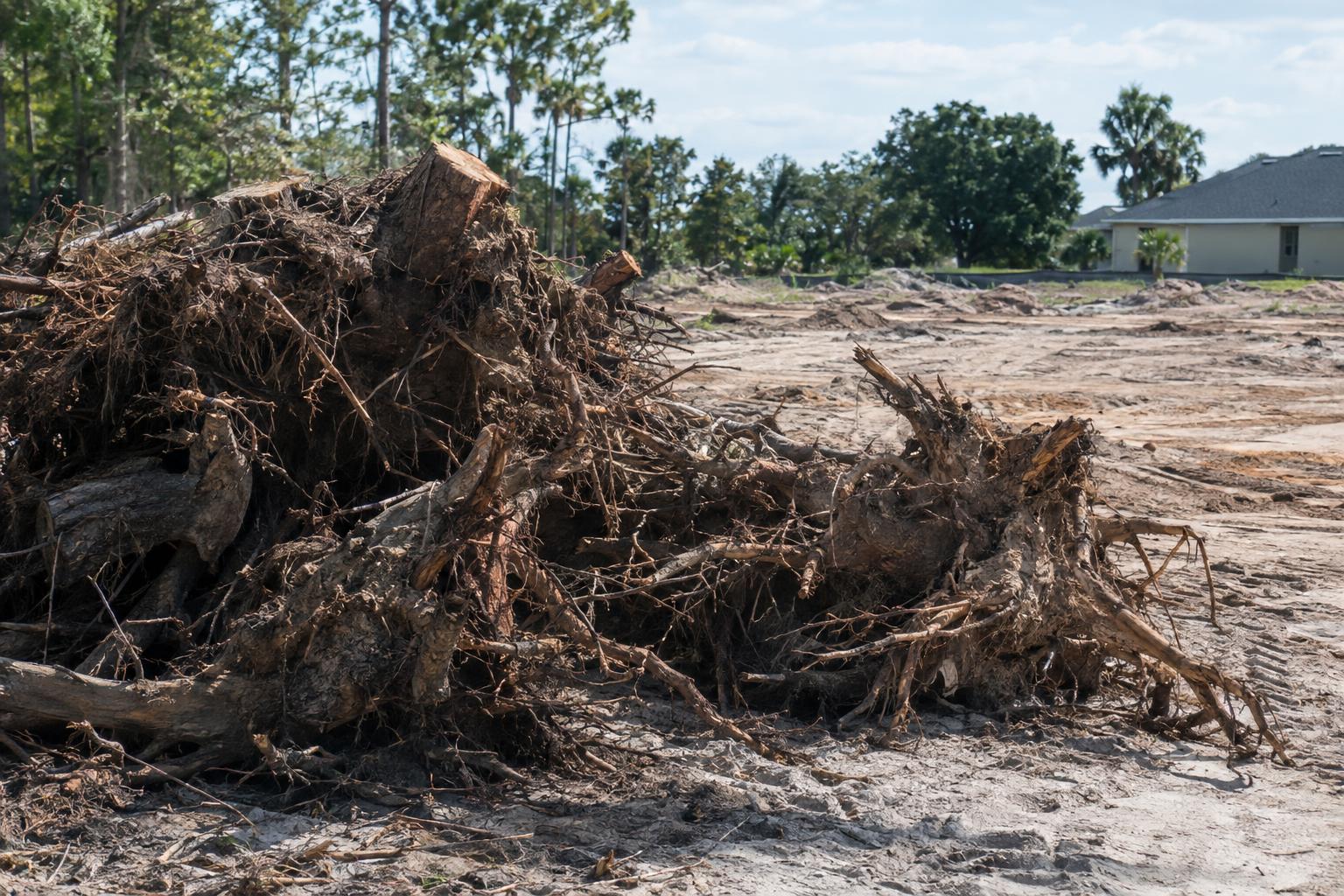
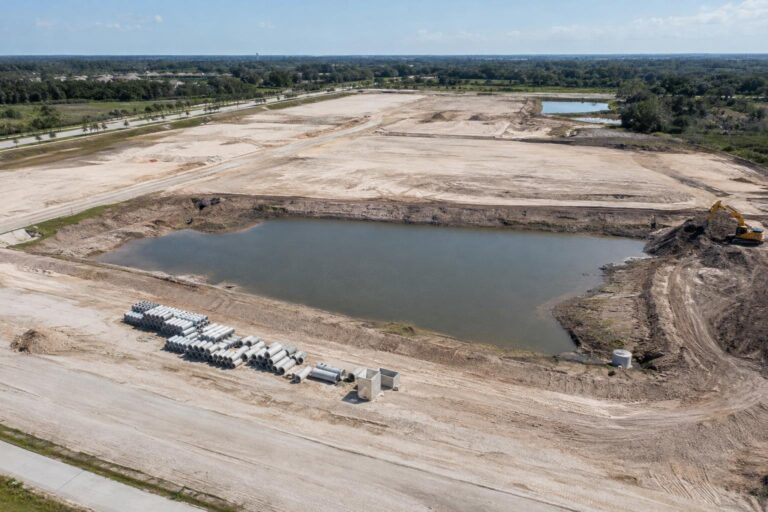
Grubbing also leaves holes. Once the stumps are out, the voids get filled and compacted with suitable material so the ground is ready for earthwork. The geotechnical report and the grading plans tell the crew what counts as suitable.
What FDOT Section 110 Requires
Florida DOT’s standard specification is a useful yardstick even on private jobs, because many county and municipal contracts borrow its language. FDOT’s Standard Specifications cover the work in Section 110, titled Clearing and Grubbing. The notes below come from the FY 2026-27 edition, and your contract documents control over anything we summarize here.
Standard versus selective
Section 110 splits the work in two. Standard work completely removes buildings, timber, brush, trees, stumps, roots, rubbish and debris, along with existing flexible pavement and base, drainage structures, culverts and pipes. It applies where excavation is done, where roadway embankments will be built and where structures will go.
Selective work is narrower. The crew removes only the vegetation and obstructions shown on the plans, protects the trees that stay, and can’t stage, stockpile or park in those areas. Tree removal is limited to the trees the plans call out.
Root depth and disposal
For standard work, the specification says to remove roots and other debris to a depth of 12 inches below the ground surface where excavation will be performed or embankments built. In those areas the crew also plows the surface to a depth of at least 6 inches and removes the roots that turn up. Elsewhere, roots and debris projecting through or appearing on the original ground are removed to 12 inches, without plowing.
The same section requires disposal that meets federal, state and local rules, and it says not to block waterways with debris. With the Engineer’s approval, wood chips can be spread evenly to a depth of no more than one inch in designated areas of the right-of-way.
What Plans and Specs Should Say Before You Bid
A clear scope removes most of the change-order risk. Before the bid date, check that the documents answer these questions:
- Limits
- Where does clearing start and stop, and is the boundary staked or only drawn?
- Standard or selective
- Which areas are cleared completely, and which keep trees or natural vegetation?
- Protection
- Which trees stay, what barrier protects them, and who maintains it?
- Depth
- How far below grade do roots and stumps come out, and does that change under pads, roads and ponds?
- Demolition
- Are buildings, slabs, pavement, wells, culverts or old utilities in the limits, and who handles them?
- Disposal
- Is material hauled off, chipped, stockpiled or reused, and where does it go?
- Backfill
- What fill and compaction fix the stump holes?
Hidden items deserve a line in the scope too. Section 110 tells the crew to stop work immediately in the vicinity and notify the Engineer if they uncover any condition indicating asbestos, and it lists requirements for plugging wells. Old foundations, buried tanks and abandoned pipes show up on parcels that have been developed before, so ask the owner what records exist and who pays when something unexpected turns up.
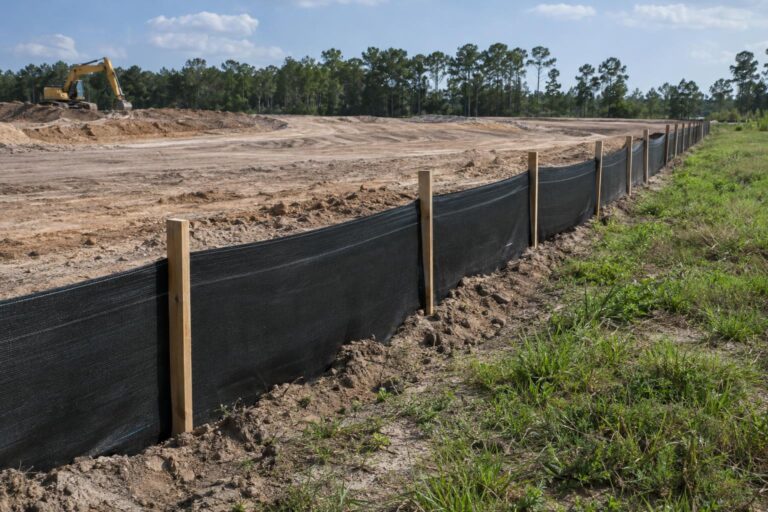
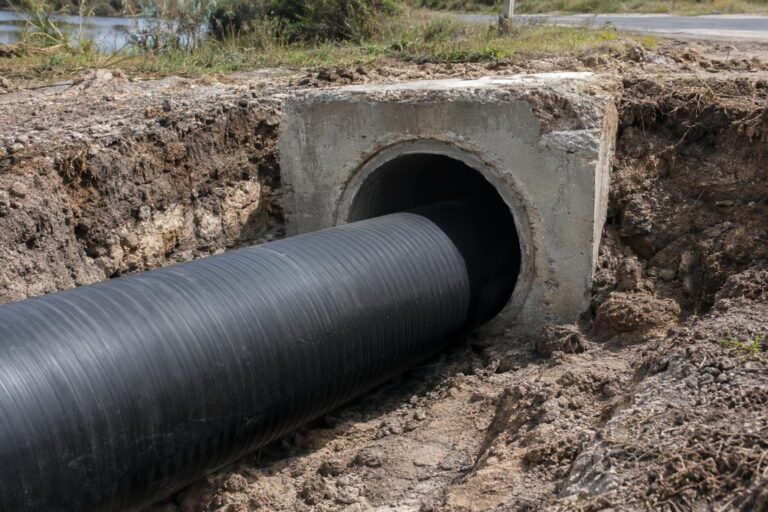
The erosion and sediment control plan belongs on this list too. Disturbed soil leaves a site quickly, so perimeter controls normally go in as the plans sequence them. If you also need storm pipe or swales, the same bid package can cover our drainage work.
Handing Off a Cleared Site to Grading
A cleared and grubbed parcel isn’t finished until it’s stable and marked. Survey stakes and flagging show the next crew the limits, and the perimeter controls keep loose soil on the property.
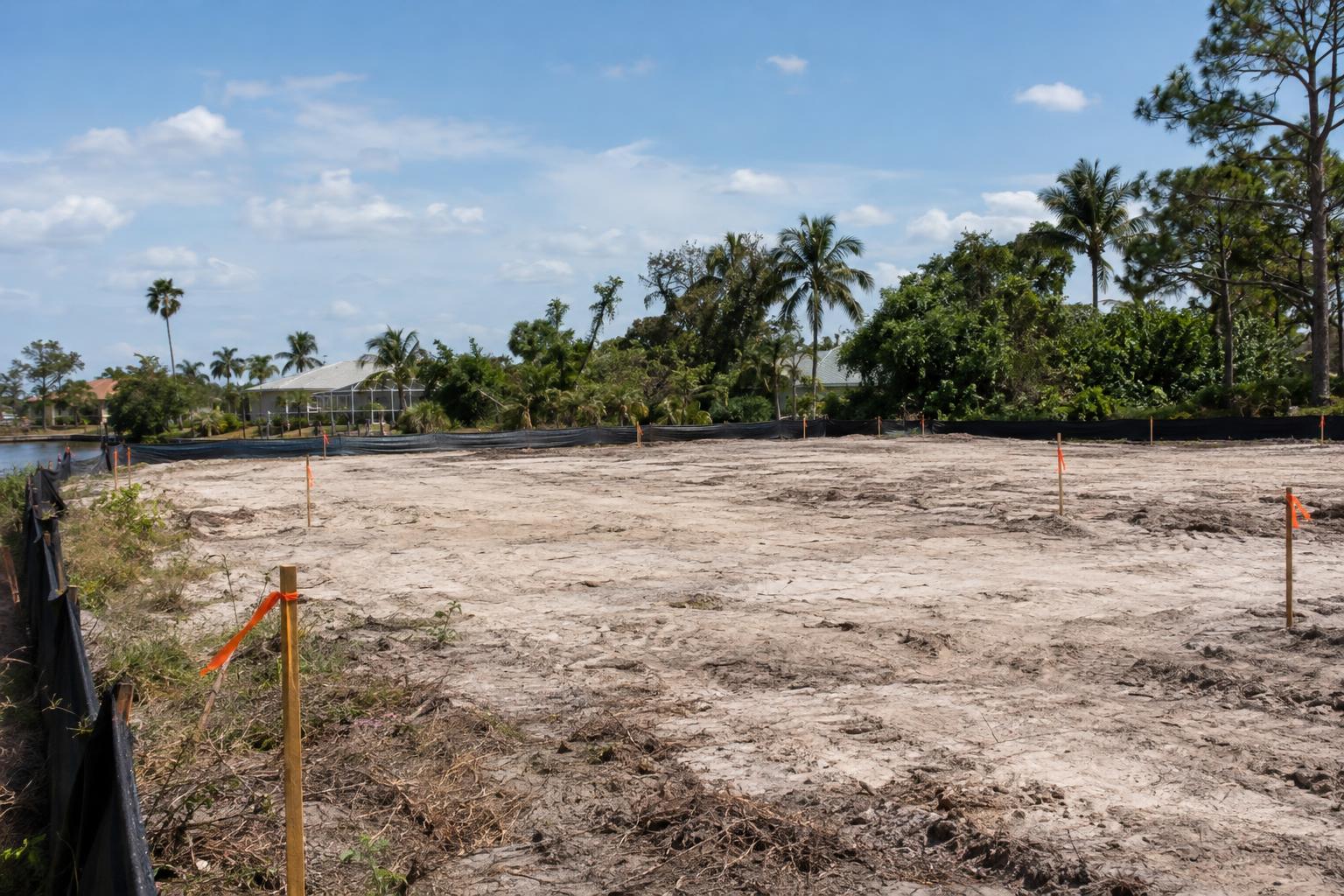
Florida’s construction generic permit sets a timing rule for bare ground. It says to initiate stabilization measures within 7 calendar days after construction activities have temporarily or permanently ceased for any portion of the site. You can read the language in the Florida Department of Environmental Protection’s construction generic permit. If grading won’t start right away, plan for seed, sod or another stabilization measure in the interim.
Plan the haul route as well. Debris trucks leaving a wet site track soil onto public roads, and the plans or local permit may require a stabilized entrance and sweeping. Raise that before the bid so the crew prices it in.
The handoff also works better when one contractor holds the whole sequence. Our site development crews take a parcel from clearing through grading, site utilities and final grassing, so the person who sets the limits is the person who grades to them.
Frequently asked questions about clearing and grubbing
What’s the difference between clearing and grubbing?
Clearing removes what’s above the surface: trees, brush, fences and debris. Grubbing removes what’s below it: stumps, roots and buried material. Most specifications price and describe them together because one crew usually does both in the same pass.
What is site clearing in construction?
It’s the first earth-disturbing step on a project, done inside limits shown on the plans. The goal is bare, stump-free ground that can be graded, filled and compacted for roads, pads, ponds and utilities. It usually includes removing old pavement, fences and small structures inside the limits, as long as the plans say so.
How long does it take to clear a site?
It depends on acreage, vegetation density, access, wet ground and where the debris goes. Dense scrub with heavy roots takes longer than open pasture, and the rainy season can slow haul-off. We don’t quote a duration without seeing the plans and the site, and a realistic schedule also accounts for permit conditions, tree protection and any inspection hold points the owner has set.
Can the wood be chipped and left on site?
Sometimes. FDOT’s Section 110 allows chips to be spread to a depth of no more than one inch in designated right-of-way areas when the Engineer approves. On private sites, the owner’s permits and local rules decide.
Call (239) 841-6400 or invite V&H to bid and send the clearing limits, tree protection notes and disposal requirements, so we can price the first pass the way your plans intend.