The asphalt paving process is a chain where each link depends on the one before it. A weak base, a dirty surface, a cold load of mix or a missed joint will show up in the finished pavement. Whether the project is a public road or a commercial site, the steps are the same: prepare, tack, haul, lay, roll, join and check. Below we walk through each one, using FDOT’s Standard Specifications as the reference, and note what changes between a road and a private site.
We self-perform asphalt paving, which means these steps are ours to sequence.
The asphalt paving process, step by step
Base and surface preparation
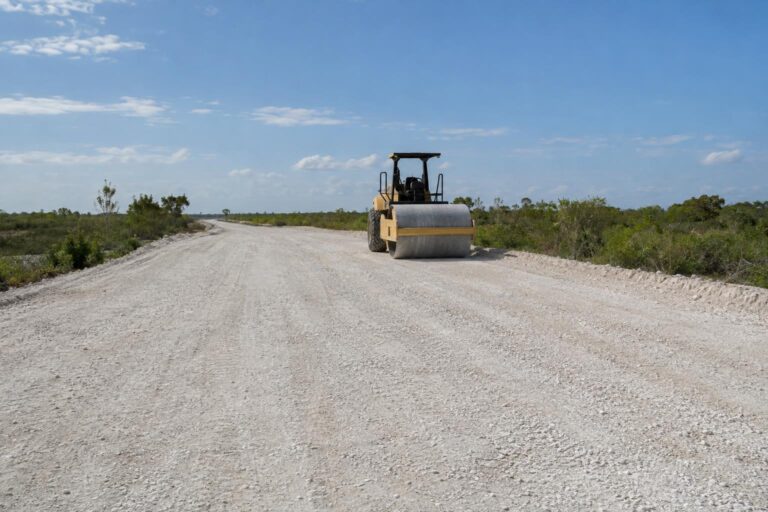
FDOT’s specification lets crews place mix only on a surface that has been prepared and is intact, firm, dry and clean. On a new road or lot, that surface is typically the compacted base, which gets a bituminous prime coat. Before any mix goes down, crews clean the base or existing pavement with power brooms or blowers, then hand broom where machines can’t reach. If your project needs base work first, our roadwork page shows how we frame that scope.
Tack coat
A tack coat is a thin sprayed layer of asphalt binder that bonds new mix to what’s beneath it. FDOT requires tack on existing pavement surfaces the new asphalt will bond to and between successive layers, always on a clean surface. Crews don’t apply tack while rain is falling or when water is standing on the surface. Prime coat and tack coat are different products with different jobs: prime goes on the prepared base, and tack bonds one asphalt surface to the next.
Choosing the mix
The plans name the mix, and the mix follows the traffic. FDOT’s Superpave mixes come in Type SP-9.5, SP-12.5 and SP-19.0, and the design traffic level that drives the choice is stated in the contract documents. The asphalt has to come from a plant on FDOT’s Production Facility Listing. On a commercial site, the civil plans typically give the mix designation and the thickness of each layer instead.
Hauling and mix temperature
Asphalt is made hot at a plant and has to be placed while it’s still workable. FDOT requires the contractor to check mix temperature at the roadway on the first five loads and on one of every five after that. Any load outside the allowed temperature range is rejected, and the engineer is notified. Trucks, plant output and distance from the job all need to line up with the paver’s pace.
Laying the mat
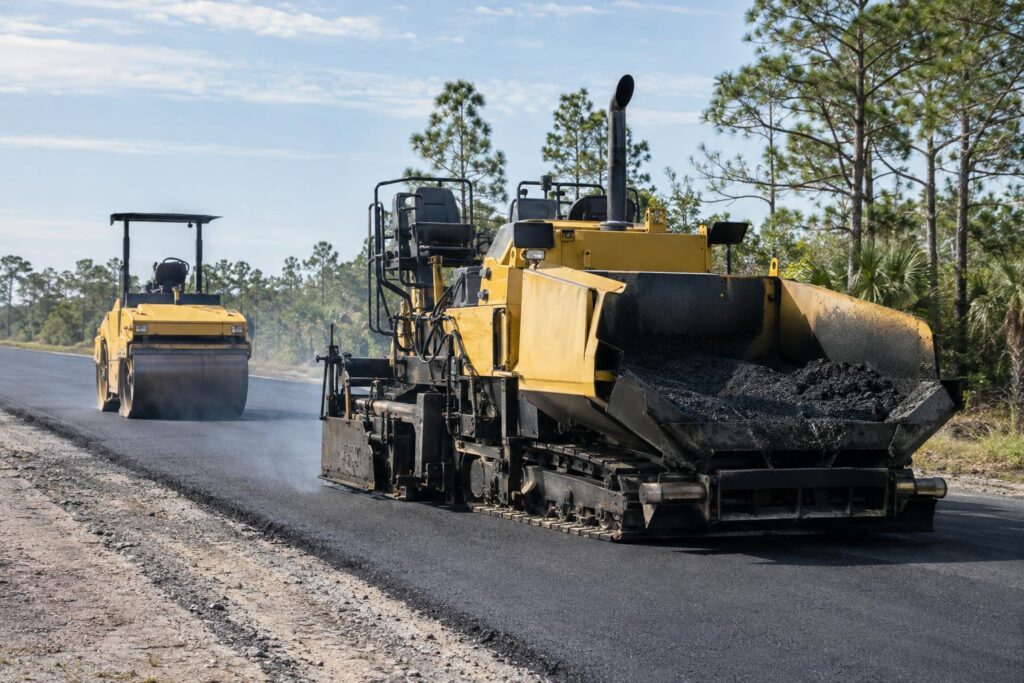
The asphalt paver is a self-propelled machine with a receiving hopper and a mechanical screed that sets the thickness and cross slope. FDOT’s specification calls for automatic screed controls and electronic cross slope controls, and for placing mix by the stringline method so the pavement edge stays true. The paver’s speed follows the rate of mix delivery, never faster than the speed that allows proper compaction. Hand work is allowed only in small areas the paver can’t reach.
Rolling
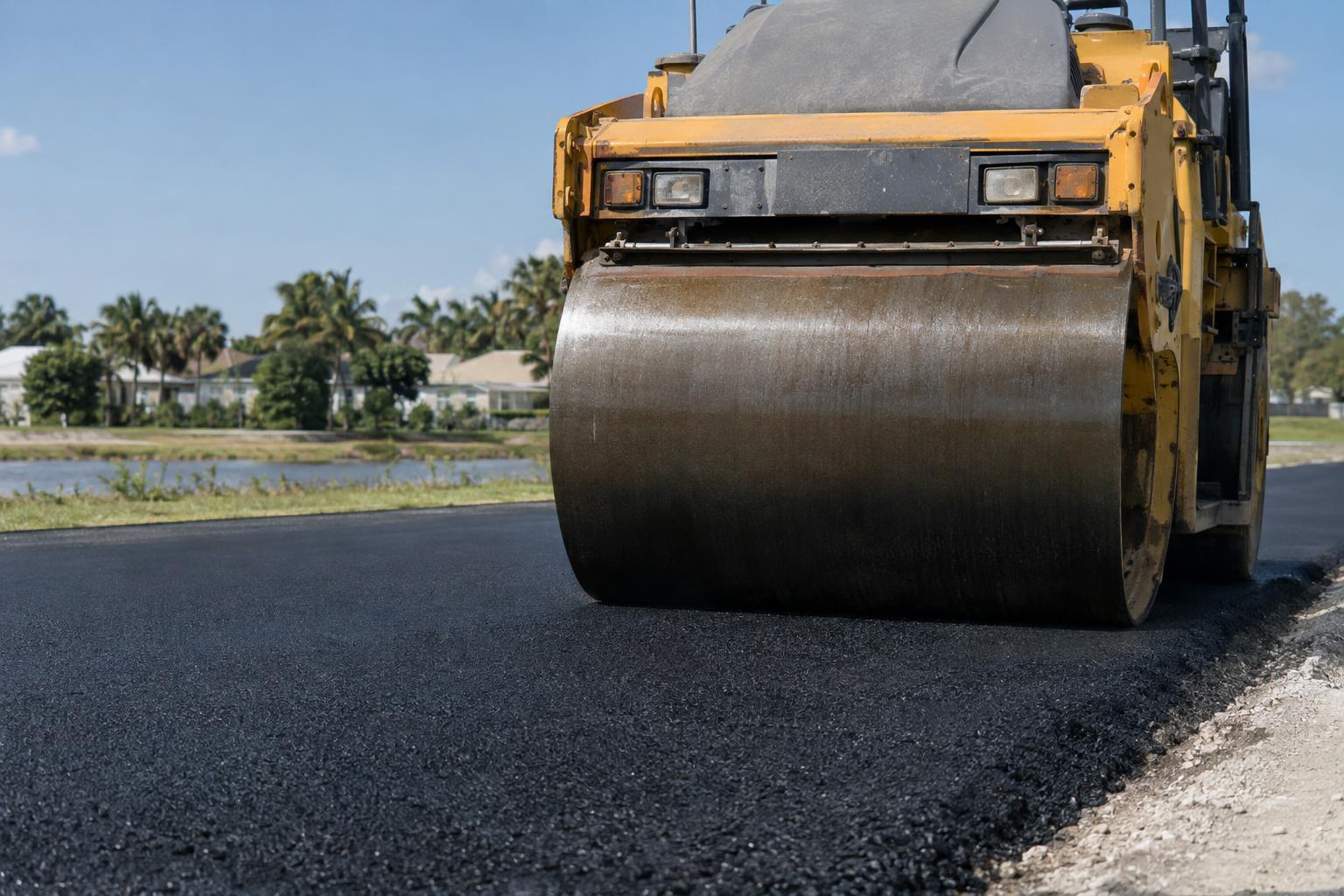
Rolling is where the mat reaches density. When density testing isn’t required for acceptance, FDOT’s standard rolling procedure is two static passes with a tandem steel-wheeled roller close behind the paver, five passes with a pneumatic-tire roller, then one finish pass with a steel-wheeled roller. When density is tested, the crew picks the equipment and sequence to hit the required number. Either way, rolling has to finish before the mat cools too far for effective compaction.
Joints and tie-ins
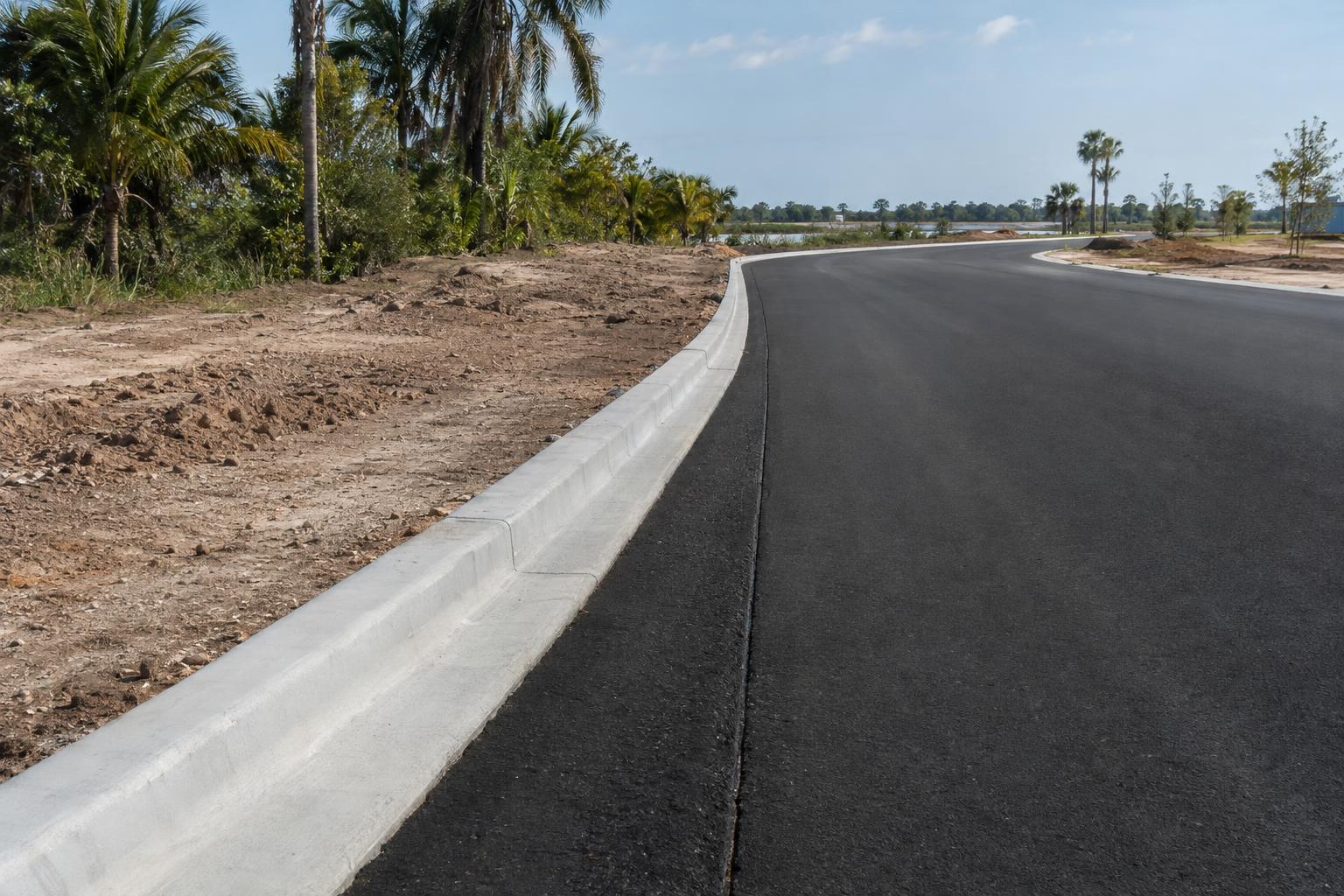
Joints are a common weak point in any pavement. FDOT requires longitudinal joints in successive layers to be offset 6 to 12 inches, and it says to plan the friction course joints so they avoid the wheel paths. Transverse joints are kept to a minimum by placing mix as continuously as possible. Areas a roller can’t reach, such as the edges beside curbs, manholes and gutters, are compacted with hand tamps or other approved means.
Surface checks
Checks run all through the shift, not only at the end. FDOT’s specification monitors density at least once per 1,500 feet of pavement and keeps the average spread rate within 10 percent of target. It also measures cross slope every 100 feet per lane, and on tangent sections the acceptance tolerance is 0.4 percent for an individual measurement and 0.2 percent for the average. Local agencies and private owners set their own acceptance criteria, so your contract documents are the standard.
Roads versus commercial sites
The steps match, but the driving documents differ. A public road project follows the owner’s specification and typical sections, usually with defined testing and reporting. A commercial site follows the civil engineer’s plans and the geotechnical report: mix type, layer thickness, base and drainage are all shown on the drawings. FDOT’s base specification treats parking lots alongside travel lanes for compaction acceptance, which tells you the base under a lot needs the same attention as the base under a road.
Layering is another difference to confirm. Plans show total asphalt thickness as one or more lifts, and each lift is rolled and checked before the next goes down. FDOT’s specification says to correct defects such as depressions before laying the following course, so a problem in the first lift gets fixed before it’s buried under the surface.
On a private site, asphalt usually comes late, after underground utilities, grading, stormwater structures and curb. That timing means paving crews inherit every earlier tolerance, from inlet elevations to curb lines. Our site development scope covers the pads, parking lots and site paving that fit this sequence, so the earlier trades and the paving can be coordinated in one contract if that suits your team.
Weather, traffic and scheduling
Rain controls the calendar. FDOT’s specification stops hauling when rain begins at the roadway, bars placing mix on a wet surface and allows work to resume once standing water has been removed from the tacked surface. Wind counts too, if it prevents proper compaction or deposits dust that weakens the bond between layers.
FDOT also sets minimum air temperatures by layer thickness and binder type, with 50 degrees Fahrenheit as the minimum for layers of 1 inch or less.
In Southwest Florida’s rainy season, afternoon storms are a scheduling reality, so plan production around them.
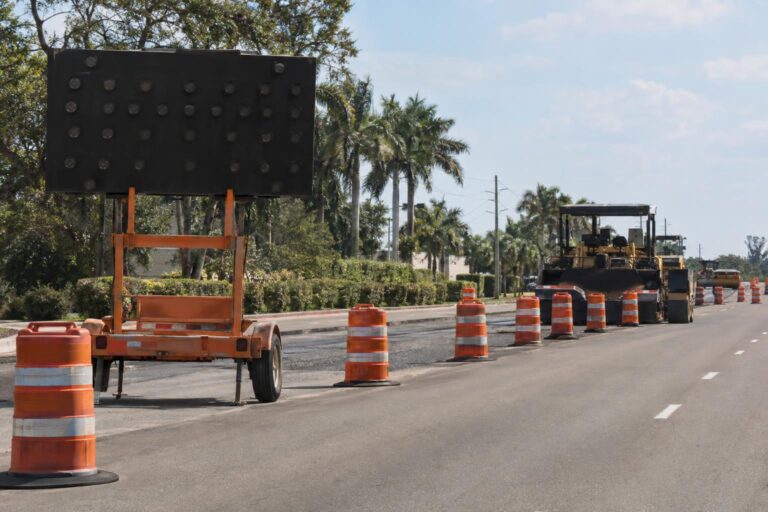
Traffic matters on road work. When traffic has to keep moving, the specification allows crews to place mix in strips so vehicles can pass. Another sequencing rule: FDOT won’t allow friction course paving until the adjacent shoulder has been dressed and grassed.
A paving bid package should include the typical sections, mix types and thickness for each layer, the testing and reporting responsibilities, working hours, phasing and the tie-in details at the project limits. Give the bid due date separately from the construction window. A clear package prevents most questions about who handles what, and the plans settle the rest.
Frequently asked questions about the asphalt paving process
What are the steps involved in installing asphalt?
Prepare and clean the base, apply a tack coat, haul the mix at the right temperature, lay it with a paver, roll it to density, build the joints and check cross slope, thickness and density. The order doesn’t change between a road and a commercial lot.
What is an asphalt paver?
It’s the machine that spreads hot mix. FDOT’s specification describes a self-propelled paver that steers, has a receiving and distribution hopper and carries a mechanical screed that adjusts the depth of the mix and the cross slope.
Can asphalt be placed in the rain?
No. Under FDOT’s specification, crews don’t place mix while rain is falling or when there’s water on the surface being covered. Work can resume after the rain stops and standing water is removed from the tacked surface, as long as the mix is still within its temperature range.
What is a tack coat and why does it matter?
A tack coat is the thin bonding layer sprayed between asphalt courses and on pavement the new mix will bond to. Without it, layers can slip apart. FDOT requires it on a clean surface and bars application during rain.
Have a road or commercial site ready for paving? Call (239) 841-6400 or invite V&H to bid with your typical sections, mix designations and tie-in details.