A maintenance of traffic plan, usually shortened to MOT plan, shows how drivers, cyclists and pedestrians get through or around a work zone while crews build. It decides where lanes close, how long they stay closed, which sidewalks detour and how a business keeps its entrance. For an owner or general contractor, it also drives cost and sequence. Here’s what the plan covers on Florida projects, which documents sit behind it, and how it shapes bids and schedules.
What a maintenance of traffic plan contains
The Federal Highway Administration describes a transportation management plan as a set of strategies for managing a project’s work zone impacts. On every project, that plan includes a temporary traffic control (TTC) plan covering traffic safety and control through the work zone. FHWA notes that some states call TTC plans traffic control plans or MOT plans, and FDOT’s Standard Plans Instructions treat temporary traffic control and MOT as the same thing. FDOT’s formal name is the Temporary Traffic Control Plan, and its Design Manual requires one for all work zones within or adjacent to highways, roads and streets.
Larger or more disruptive projects add two more components, according to FHWA: transportation operations, such as signal retiming and incident management, and public information, such as notices about what to expect and which routes to use.
The documents behind the plan
The plan rests on Part 6 of the federal Manual on Uniform Traffic Control Devices (MUTCD), which covers temporary traffic control. In Florida, FDOT’s Standard Plans 102 series turns that into typical layouts, and Index 102-600 gives general information for traffic control through work zones. Section 102 of FDOT’s Standard Specifications then sets what the contractor must furnish and maintain. County and city projects may reference these documents, and your contract says which ones apply.
What the sheets show
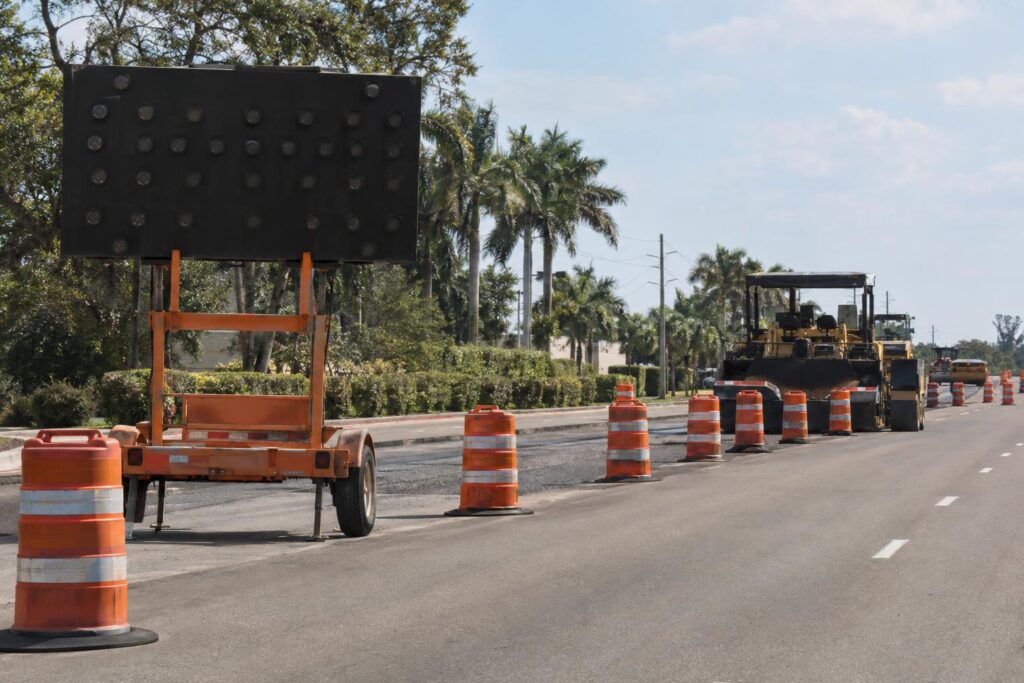
A typical set of MOT sheets shows lane closures, shifts and tapers, detours, device placement (drums, signs, arrow boards, barriers), work zone speed, temporary pavement markings, pedestrian and bicycle routes and access to side streets and business entrances. FDOT’s Design Manual distinguishes a detour (traffic redirected to an alternate route), a diversion (traffic moved onto temporary pavement beside the road) and a lane shift (traffic moved to a different part of the existing roadway). FDOT’s specification also expects a plan for each phase of activities.
Lane closures, phasing and working hours
Lane closures are where an MOT plan most directly controls production. FDOT’s specification requires approval for every lane closure, and routine requests go in 14 calendar days ahead through the department’s Lane Closure Notification System. Anyone building a schedule for an FDOT-style job should include that lead time before the first closure.
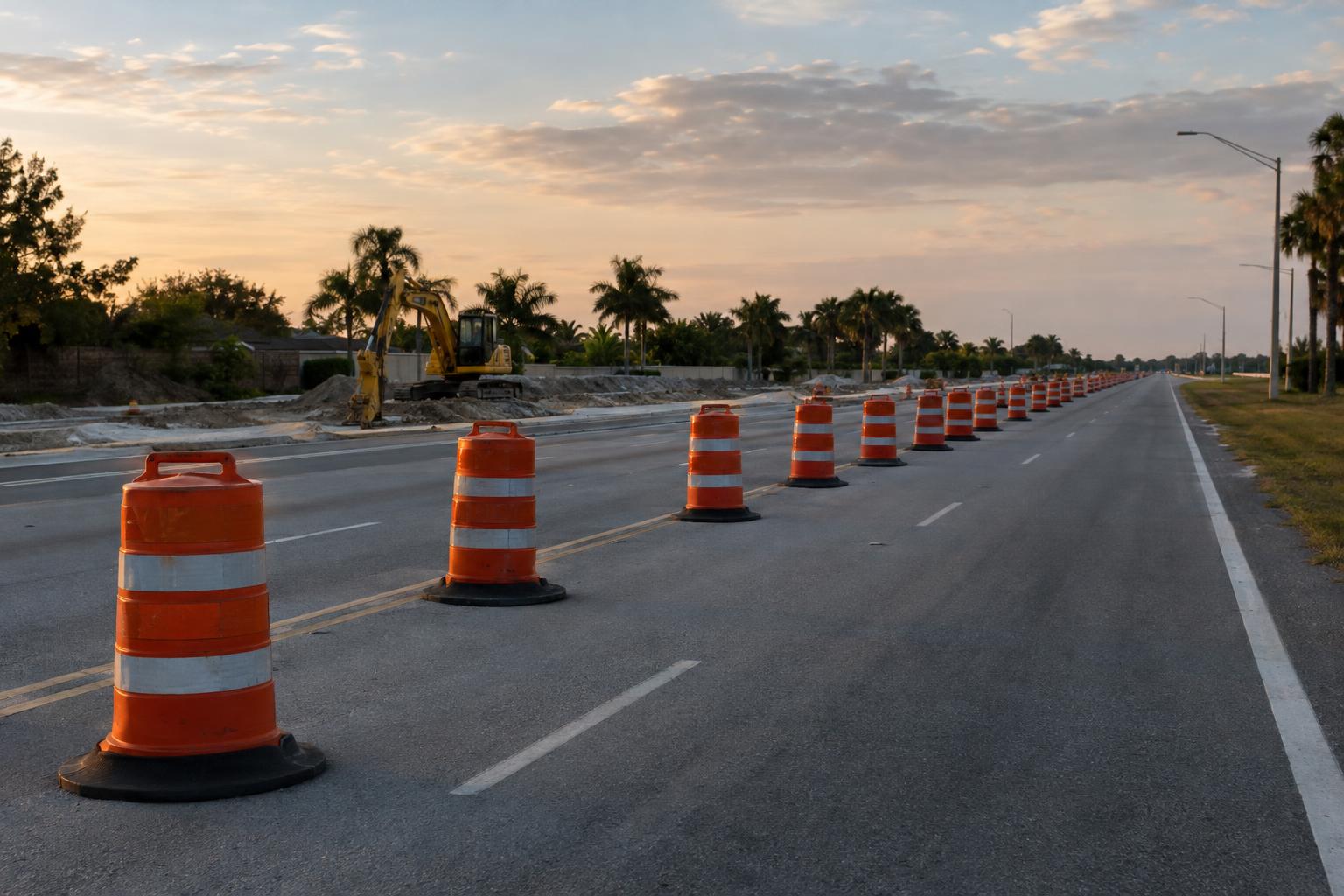
The Design Manual explains how allowable hours get set. A lane closure analysis calculates peak-hour volumes and restricted capacity, then determines whether a closure should be allowed and when. Roads with heavy directional commuting can push work to nights, which changes crew scheduling and lighting needs. For FDOT projects, the manual calls for at least one ten-hour closure period per 24-hour work period unless the State Roadway Design Engineer approves otherwise.
Contractors can sometimes propose changes. Under Section 102, an alternative TTC plan must be signed and sealed by the contractor’s engineer of record, FDOT can reject it, and written approval is required before any work uses it. That’s a design-side submittal, so build time for it into the schedule if your team considers one.
Day to day, the specification expects the contractor to keep one lane of traffic open in each direction, use flaggers where both directions must share a single lane and give residences and businesses continuous access. It also requires a Worksite Traffic Supervisor who directs the temporary traffic control, is on site for setup and takedown and during nighttime operations, and inspects the devices on a regular schedule.
Pedestrians, bicyclists and business access
Sidewalk and crossing work is where pedestrian MOT shows up most. FDOT’s specification calls for a safe, accessible path around the work site, separated from traffic and in line with the ADA Standards for Transportation Facilities: stable, firm, slip-resistant and free of holes, debris, mud, equipment or stored material. When a sidewalk or pedestrian way must close for 60 minutes or longer, the contractor provides a pedestrian detour or a temporary pedestrian way, with advance signs and approved channelizing devices.
That’s the FDOT rule. Other owners may reference a different accessibility standard, so check what your plans cite.
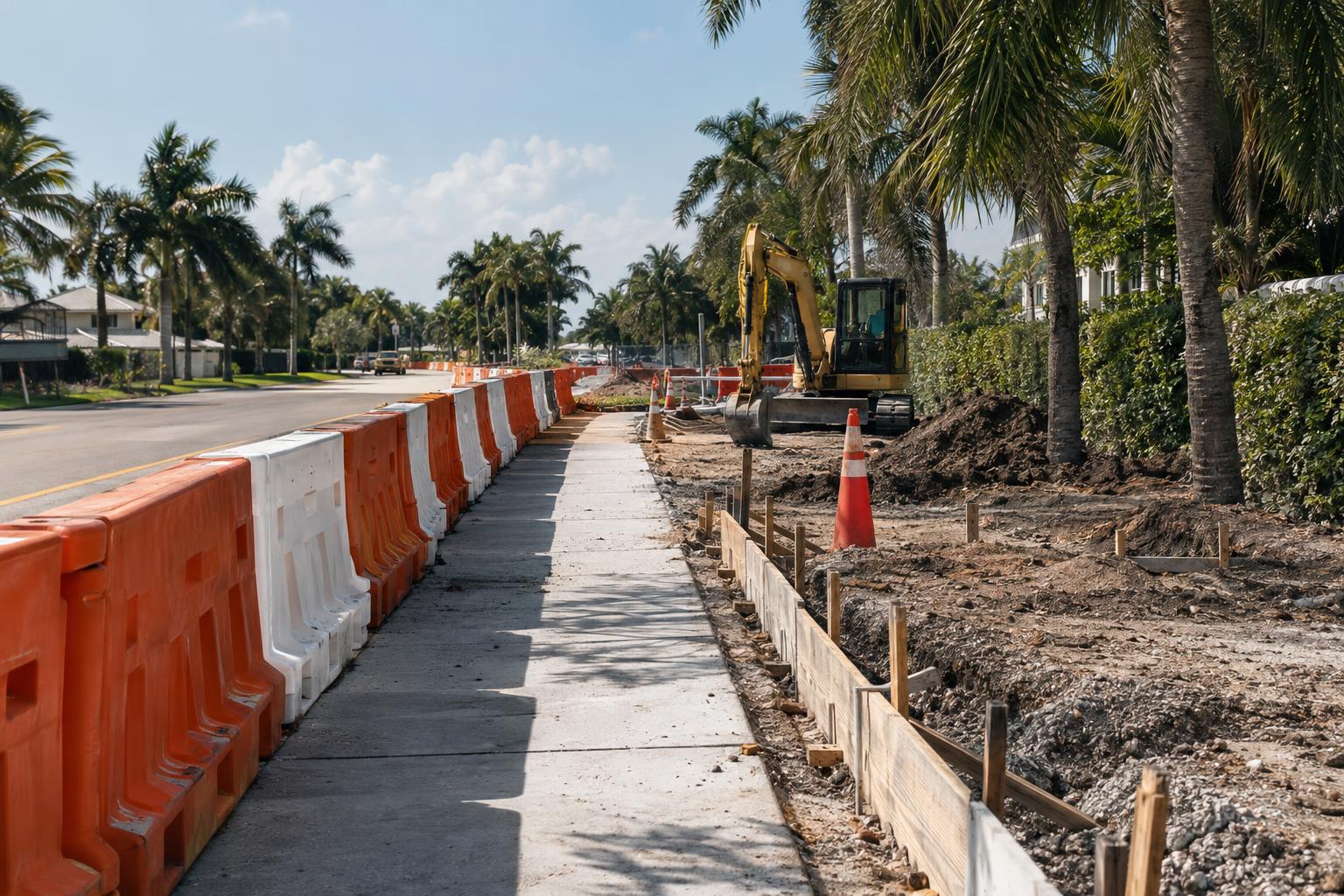
FDOT’s Design Manual adds planning guidance. It asks for like-for-like facilities where feasible, phasing so pedestrian and bicycle routes close only when necessary, and detours that don’t lead people into conflict with equipment. It also says detours should not add more than 30 percent to the length of a non-motorized route, or run longer than 0.25 miles for pedestrians. If your project includes new walks, curb ramps or crossings, our concrete page describes that work, and the pedestrian phasing in the plans will control the order we build it.
How the plan shapes bids and schedules
Bidders price what the sheets require. Under FDOT’s specification, general MOT is a lump sum item, and many components are paid separately: traffic control officers by the hour, work zone signs and arrow boards per unit per day, temporary barrier per foot. Devices are paid for the days they’re in use, so a longer duration or additional phase raises MOT cost even when the roadwork quantities stay the same.
For a general contractor or public agency assembling a package for our roadwork scope, these items let us give you a useful number the first time:
- The TTC sheets for every phase, not only the first.
- Allowable lane closure windows, and whether nights or weekends are required.
- Who furnishes traffic control officers and whether they’re a separate pay item.
- Detour agreements with other agencies and any business-access conditions.
- How MOT is paid: lump sum, itemized or included in the road items.
Staffing is part of the price as well. On FDOT-style work, the Worksite Traffic Supervisor must meet the personnel qualifications in the specifications, and traffic control officers are paid only where the plans specify them, so read that language before you finalize a bid. If the plans call for a pedestrian escort operation, that is priced by the hour for the people actually on site.
Share the bid due date separately from the planned construction dates. The plan’s phases and closure windows often set the true duration, not the quantities alone. A clear MOT package reduces the questions that would otherwise show up as addenda or change orders. For background on the federal framework, see the FHWA fact sheet on transportation management plans for work zones, and for the Florida specification language, FDOT’s Standard Specifications.
Frequently asked questions about maintenance of traffic plans
Is an MOT plan the same as a traffic control plan?
Mostly, yes. FHWA says some states call the temporary traffic control plan a traffic control plan or a maintenance of traffic plan. FDOT’s formal term is Temporary Traffic Control Plan, while contractors and bid documents often say MOT.
Who prepares the plan?
On FDOT-style contracts, the designer’s plans include the TTC plan. A contractor may propose an alternative, but it must be signed and sealed by the contractor’s engineer of record and approved in writing before use.
How far ahead do lane closures need to be requested?
Under FDOT’s specification, routine requests go to the engineer 14 calendar days before the planned closure. Counties and cities set their own notice rules, so read the contract’s closure and notification language.
Does a small project need a plan?
Yes. FDOT’s Design Manual requires a Temporary Traffic Control Plan for all work zones within or adjacent to highways, roads and streets, and FHWA says the plan for every project includes a TTC plan. A small job may use a standard layout from the Index 102 series, but it still needs a documented plan.
Traffic control belongs in the price from the first day of the estimate. Call (239) 841-6400 or invite V&H to bid with your TTC sheets and closure windows attached.