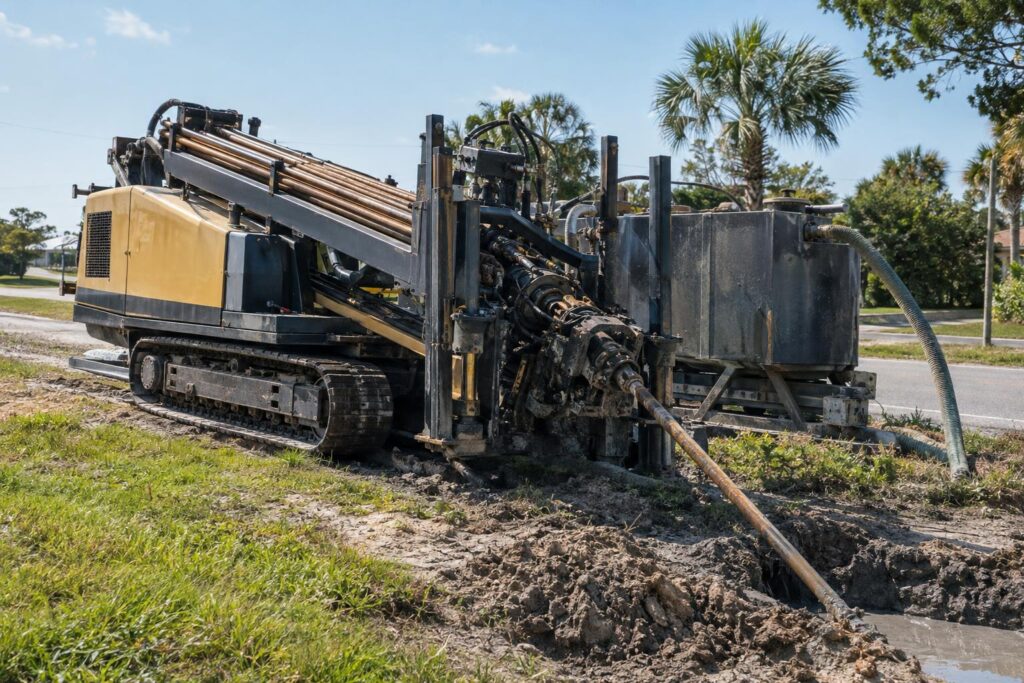
How does directional boring work, and when is it a better choice than digging a trench? The short answer is that a drill rig steers a small cutting head underground along a planned path, enlarges the hole, and pulls a new pipe back through it. Nothing between the entry and exit points gets opened up, which is why it’s a common method under roads, canals and mature trees.
Horizontal directional drilling, or HDD, is something we self-perform on water, sewer and force main projects. This walk-through is written for public works staff, engineers and contractors who need to decide where a bore fits in a utility package and what to expect from the crew.
How Does Directional Boring Work? The Short Version
A bore has three working stages and a planning stage in front of them. The rig sits at an entry point on one side of the crossing. The crew drills a small pilot hole along the designed path, enlarges it with a reamer, and then pulls the product pipe through the enlarged hole in one continuous run.
A drilling fluid, usually a water and bentonite clay mix, circulates the whole time. It carries cuttings out of the hole, cools the cutting head and helps keep the bore open until the pipe is in. A mud recycling unit near the rig cleans and reuses the fluid.
The plan sheets set the entry and exit locations, the bore profile and the pipe. The contractor builds the bore plan from those sheets and the field conditions.
Step One: Locates and Bore Planning
So how does directional boring work on a real job site? Mostly through preparation, because the drilling is the short part of the schedule.
Every bore starts with finding what’s already in the ground, because a drill head can strike a buried line just as a bucket can. Florida law treats it that way. Chapter 556 of the Florida Statutes, the underground facility damage prevention law, defines excavation to include directional drilling or boring from one point to another point beneath the surface of the earth. Sunshine 811, the state’s one-call center, takes those notices.
The statute says an excavator must give notice not less than 2 full business days before beginning excavation that is not beneath the waters of the state, and not less than 10 full business days before excavation beneath those waters. Member operators then mark the horizontal route to within 24 inches from the outer edge of either side of their underground facility. The statute defines the tolerance zone as 24 inches from the outer edge of either side of a marked facility, and inside it, the excavator must use hand digging, pot holing, soft digging, vacuum excavation or similar methods to identify the facility.
In practice, that means a crew may pothole a crossing to see the real depth of a line before the bore passes it. The statute says the information an excavator provides is valid for 30 calendar days, so a long schedule delay can mean a new notice.
The Pilot Bore, Reaming and Pullback
The pilot bore
The pilot bore is the steered stage. The crew pushes a drill string with a cutting head from the entry point, and the operator tracks the head’s position and depth with a locating system while steering along the designed path. The path usually curves gently down, runs level under the obstacle and curves back up to the exit point.
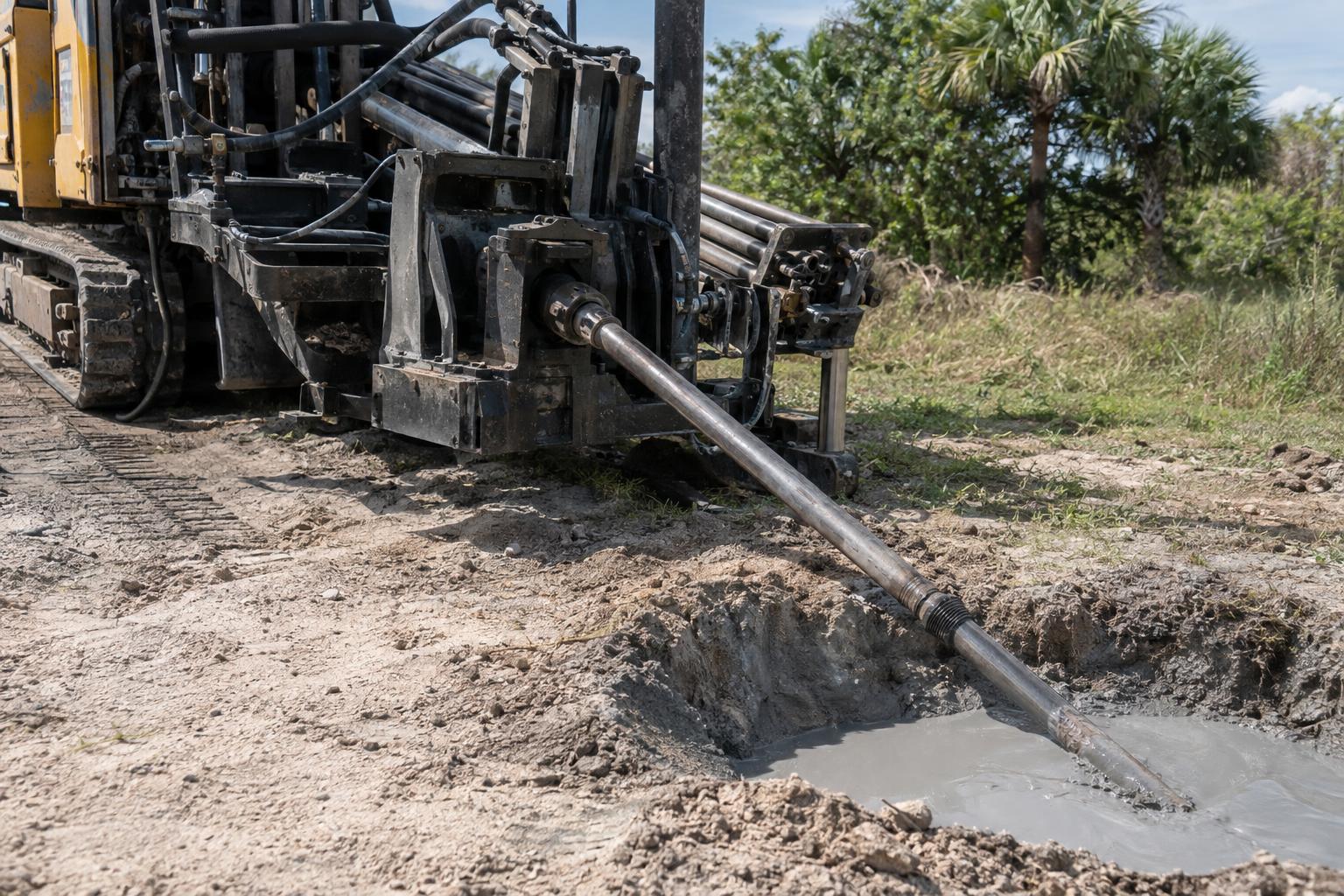
This is the stage where the underground conditions show themselves. Sand, clay, rock and groundwater each behave differently, so geotechnical information matters for the bore as well as for the open-cut work around it.
Reaming
Once the pilot head exits, the crew swaps it for a reamer sized to the pipe. The reamer is pulled or pushed back through the hole to enlarge it, sometimes in several passes with progressively larger reamers. The drilling fluid keeps flowing, so the enlarged hole stays open and clean.
Pullback
For pullback, the pipe is assembled on the exit side, usually fused into one long string. It’s attached behind the final reamer, and the rig pulls it back through the bore toward the entry pit.
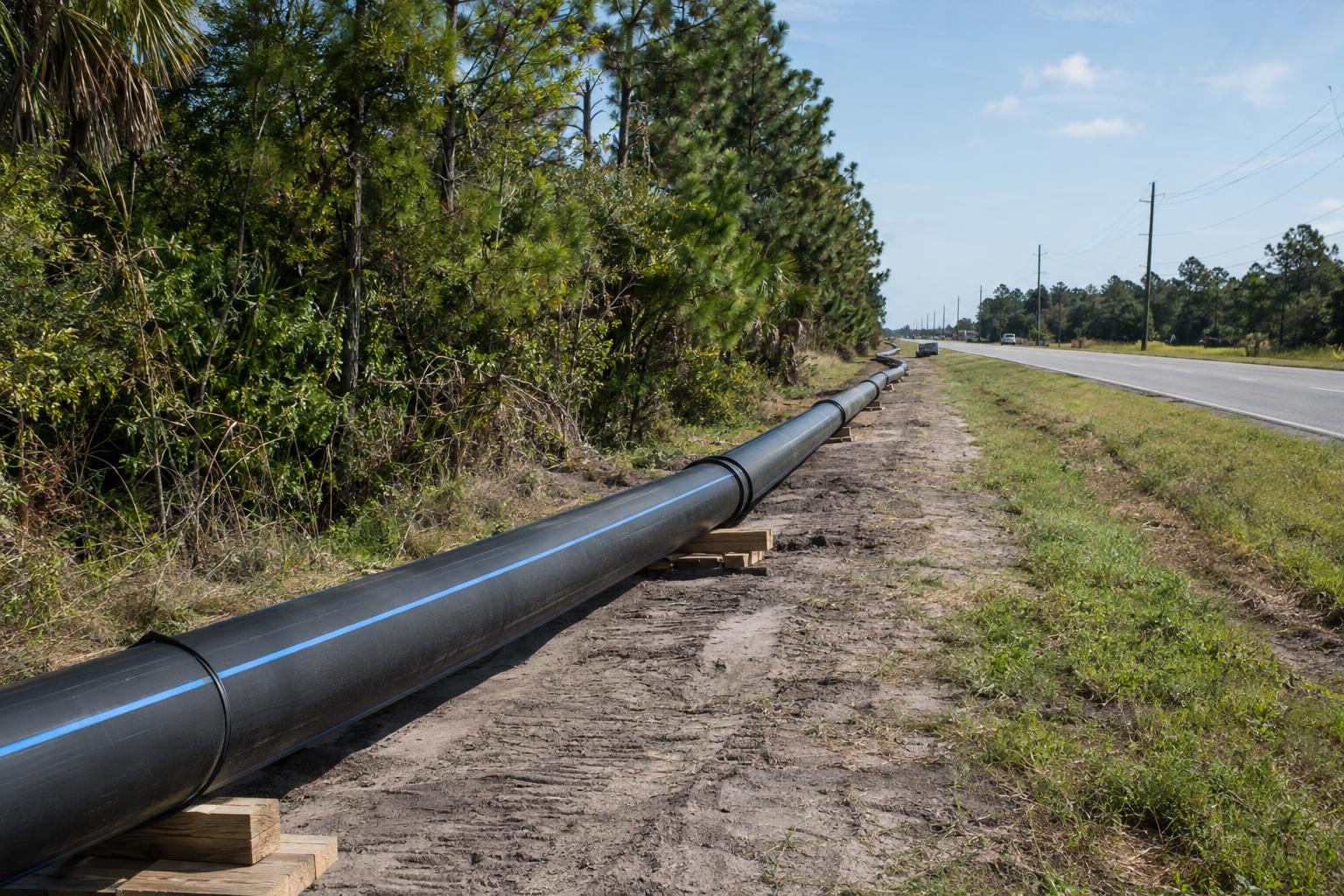
The pipe material and wall thickness come from the utility owner’s standards in the contract documents. After pullback, the crew connects the new line to the system, tests it as the specifications require and restores the entry and exit pits.
The space a bore needs
Before the rig drills, the crew lays out the entry and exit areas, sets up the fluid tank and recycling unit, and protects the surrounding ground. Plan for the footprint. A rig, its support equipment and the stretch of pipe waiting to be pulled all need room, and the pipe string often needs a clear corridor along the exit side.
When a Bore Beats an Open Cut
A bore is usually the better choice when digging a trench would cause more disruption than the crossing is worth. Typical cases include:
- Roads and intersections
- A bore avoids cutting pavement and closing lanes, which also lowers restoration work. If you’re coordinating with road construction or a county right-of-way permit, a bore can keep the road open.
- Canals and waterways
- The pipe passes beneath the channel without a cofferdam, though the agency that controls the waterway sets the permit and depth.
- Driveways, sidewalks and landscaping
- Entry and exit pits are small, so mature trees and finished surfaces stay in place.
- Crowded corridors
- Where several lines already share a right-of-way, a bore can pass under them at a controlled depth.
Open cut still wins in some situations. Short, shallow runs where the road is already closed are often simpler to trench. Gravity sewer lines that must hold a tight slope can be hard to bore accurately. And where the ground is very soft, very coarse or full of obstructions, a bore carries more risk. The plan should say which method applies at each crossing, and our underground utilities team can price either one.
What should a bid package say about a bore? List the crossings, the pipe size and material, the entry and exit areas that are available, the utilities that cross the path, any permit holder for the road or waterway, and the testing the owner requires. With that, we can tell you whether the crossing is practical and what it needs.
Drilling fluid can sometimes reach the surface along the bore path, which is called an inadvertent return. A good bore plan covers containment and cleanup before the rig starts, especially near water.
Frequently asked questions about directional boring
Do you have to call 811 before a directional bore?
Yes. Florida’s statute defines excavation to include directional drilling or boring, so the same notice requirement applies as for a trench. The crew also follows the tolerance zone rules around marked facilities.
How long does a bore take?
It depends on bore length, soil, pipe size, groundwater and how much setup the site needs. We’d rather quote from the plans than guess a schedule, and we won’t promise a duration before we’ve seen the crossing.
What pipe goes in a directional bore?
On municipal water, sewer and force main bores, fused HDPE is a common choice, but the utility owner’s specification decides. The designer picks the material and thickness based on pressure, depth and the pullback forces, and the contractor builds to that choice. If you’re not sure the specified pipe suits a bore, raise it before bid day so the question gets answered in an addendum rather than in the field.
Can a bore go under a canal?
Often, yes. The design must clear the canal bottom with the depth the owner requires, and the waterway’s permit and the longer notice period for work beneath state waters apply. Show the crossing and the permit holder on the plans, and tell us who must approve the bore profile so that review is built into the schedule.
Call (239) 841-6400 or invite V&H to bid on your utility crossings, and tell us at each one whether the plans call for a bore or an open cut.