If you work on utility or site packages, you’ll see “FM” on the plan sheets sooner or later. So what is a force main? It’s a sewer pipe that runs under pressure, carrying wastewater that a lift station has pumped, instead of letting it flow downhill on a slope. This guide explains how a force main and its lift station work together, how the pipe differs from a gravity sewer, and what we look for in the plans before we build one.
We install water and sewer mains, force mains and lift stations for municipal utilities, public works departments, developers and general contractors. The utility owner’s standards and the contract documents control materials, testing and connections on every job.
What Is a Force Main, and How Is It Different From Gravity Sewer?
The short version
An EPA research report on condition assessment of wastewater collection systems draws the line in two sentences. A gravity line is a sewer pipe sloped to convey flow by gravity, and a force main is a pressure line used to convey pumped sewage. That one difference, pumped under pressure versus sloped to flow, drives nearly everything else about how the two are designed and built.
What changes in the field
A gravity sewer needs a continuous downhill grade, so on flat ground the pipe gets deeper with every run until a pump becomes the cheaper answer. That’s common in Southwest Florida, where the land barely falls. A force main doesn’t depend on grade. Pumps push the wastewater through a pressurized pipe that can follow the ground more closely, climb over a crossing and then deliver to a gravity manhole or a treatment plant.
- Driving force
- Gravity sewers rely on slope. Force mains rely on pump pressure.
- Pipe condition
- A gravity line normally flows partly full. A force main is a pressure pipe, so joints, restraint and fittings carry load a gravity pipe never sees.
- Access points
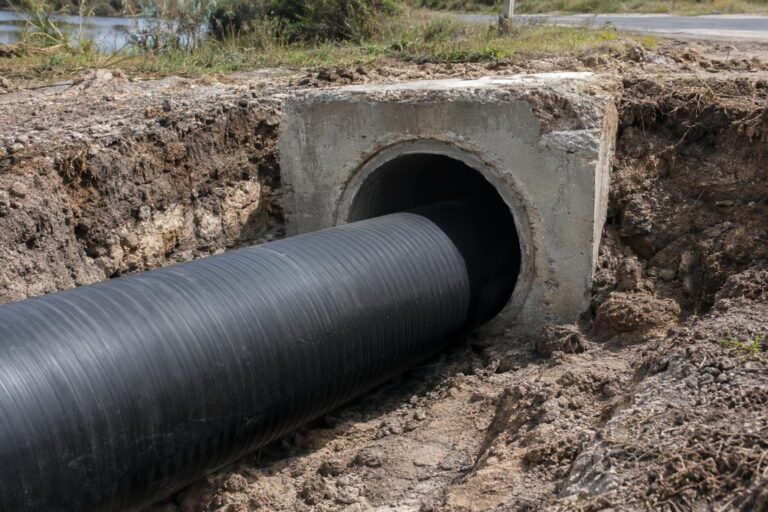
- Gravity systems have manholes along the run. Force mains usually use valves, valve boxes or vaults and air release assemblies instead, with a manhole where the flow returns to gravity.
- Testing
- A force main is pressure tested to the owner’s specification before it goes into service.
Lift Stations and Force Mains Work as One System
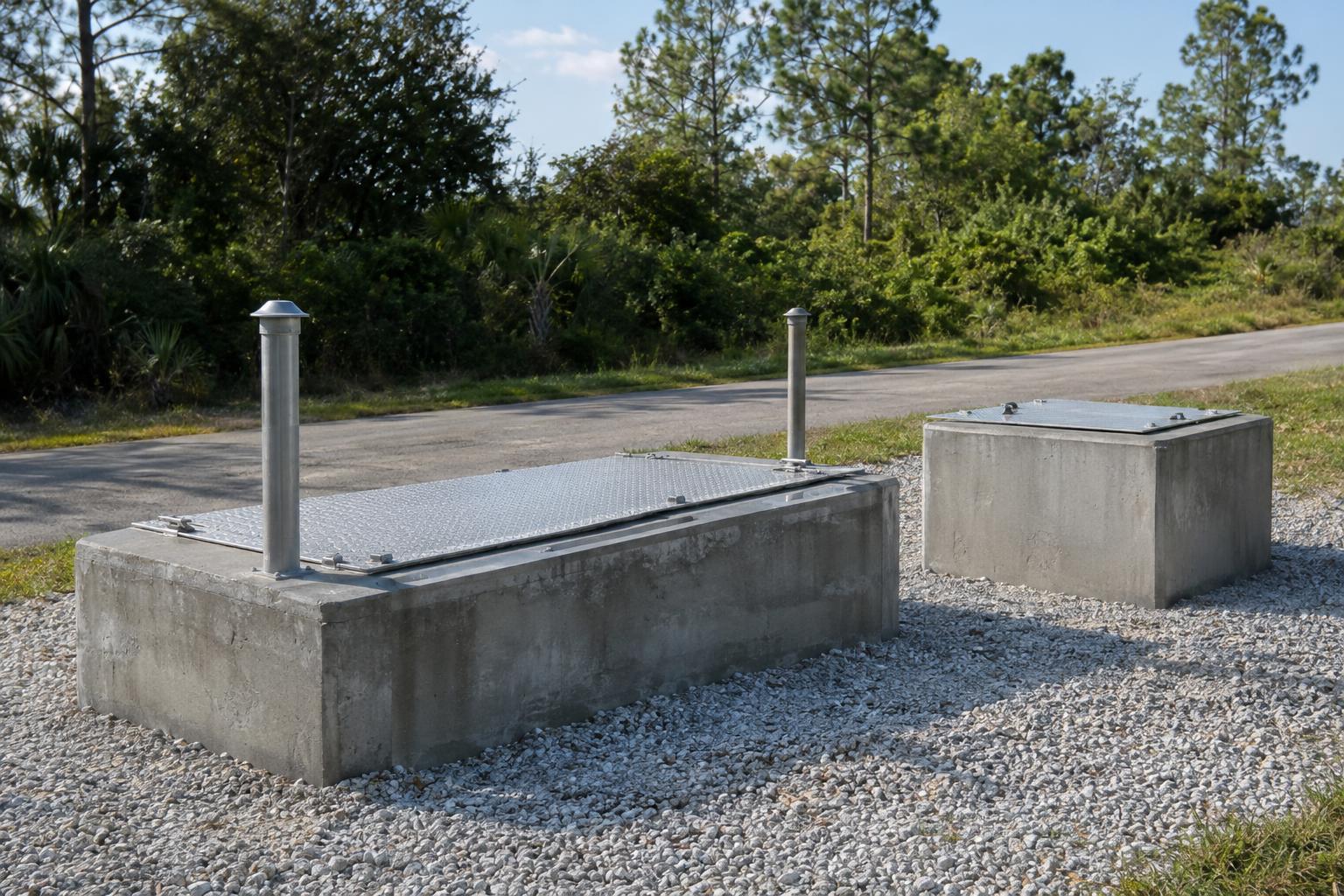
A force main never stands alone. Its starting point is a lift station, also called a pump station. Wastewater arrives by gravity sewer into a wet well, pumps lift it, and the pressure pushes it into the force main. Valves in a nearby vault isolate and control the flow, and the control equipment tells the pumps when to run.
For a builder, the pair is one construction package even if the plans split it across sheets. The wet well, the pump and valve layout, the discharge piping and the first stretch of force main all have to line up in elevation and alignment. A lift station built to the right depth with a force main that arrives at the wrong elevation is a rework.
New project managers often ask, “What is a force main doing at the end of a lift station?” The answer is simple. It’s the discharge line. Everything the pumps lift has to go somewhere, and the force main carries it to the point where the system returns to gravity or reaches the treatment plant. Because it’s pressurized, its alignment can differ from the gravity sewer feeding the station, which is why the two sets of sheets don’t always trace the same route.
Lift stations also show up on private development work. A site whose sewer can’t drain by gravity to the utility’s system may need a station and a short force main as part of its site utilities. On those projects we coordinate the utility package with the site development work around it, from pads and parking to grading.
Pipe Materials and What They Mean for the Job
The same EPA report says most force mains are built from ferrous materials such as welded steel, ductile iron or cast iron, or from plastic such as PVC and HDPE. Large-diameter force mains have also been built from prestressed concrete cylinder pipe. It also notes that force mains made of ferrous materials are susceptible to corrosion.
Material drives a lot of field decisions: how pipe is handled and strung out, how joints are made and restrained, what bedding is specified and how fittings are supported. Plastic pipe and fusion-joined pipe call for their own procedures. The plans and the owner’s approved materials list tell us which pipe goes in, and we follow it.
Maintenance is part of the same conversation. The EPA report says inspecting a force main is costly, with indirect costs such as temporary flow bypass and access to the line often exceeding the cost of the physical inspection. That’s a good reason to put the isolation valves, access points and tie-in locations in the right places during construction, because fixing them later means a bypass.
Building a Force Main: Trench, Bore or Burst
Open-cut trenching
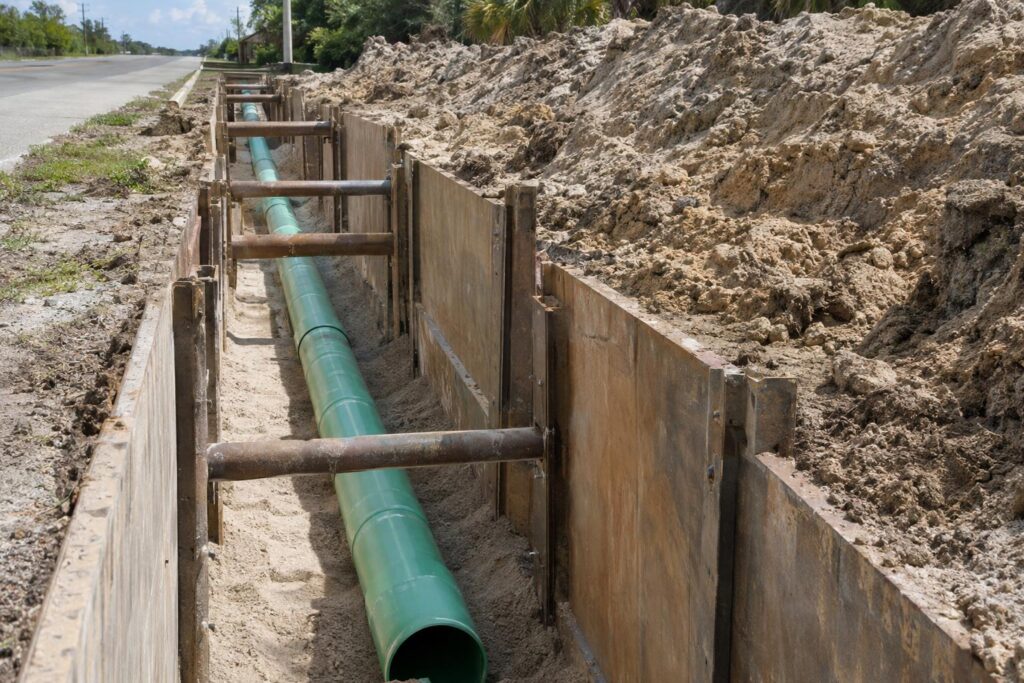
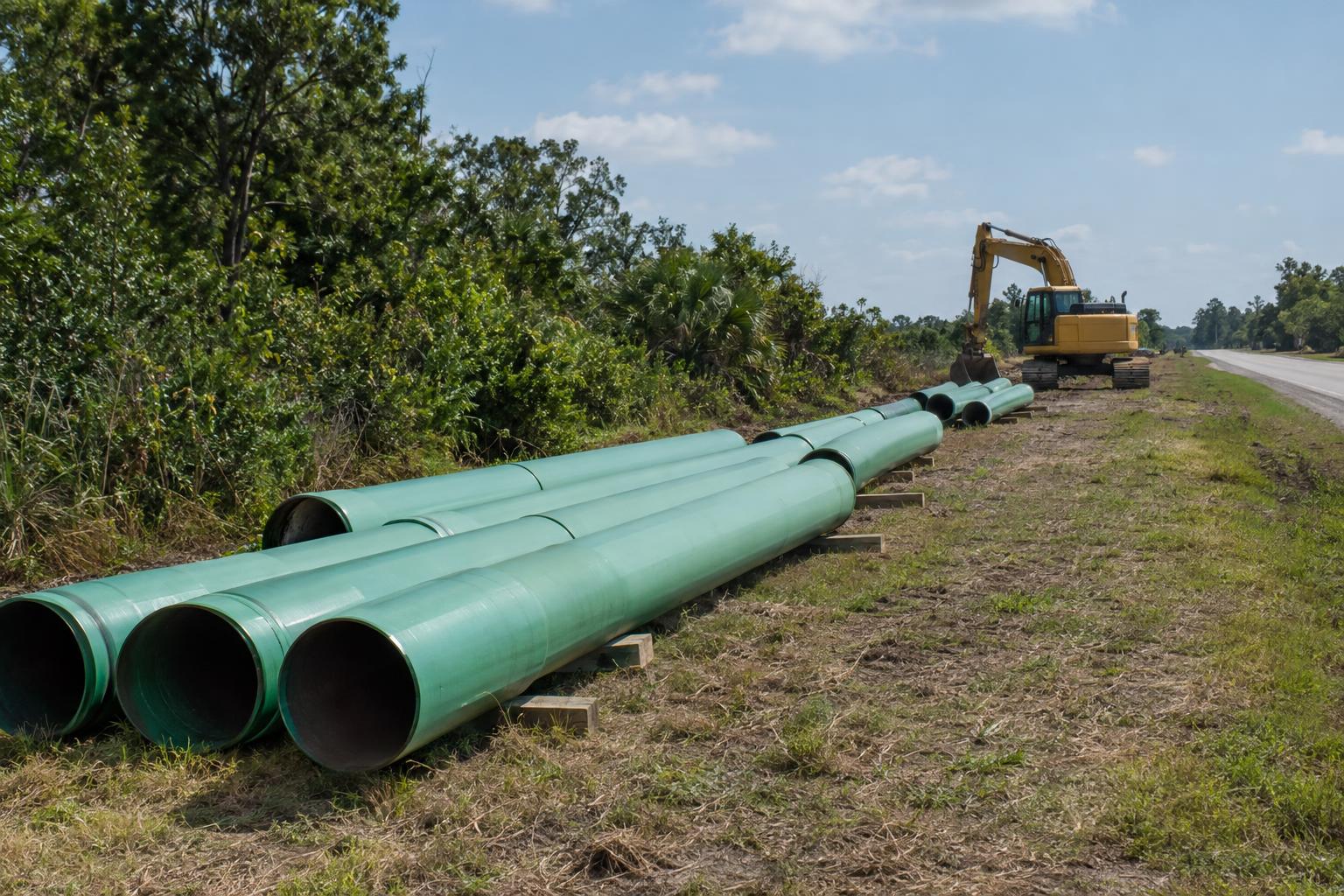
Most force mains in open ground go in by open-cut trench. The crew excavates, sets bedding, lays and joins the pipe, backfills and restores the surface. Where depth or ground conditions call for it, the trench is shored, and in Southwest Florida’s high water table it’s dewatered as well. Sandy spoil, groundwater and nearby utilities all affect how fast and how safely the trench can advance.
Directional drilling for crossings
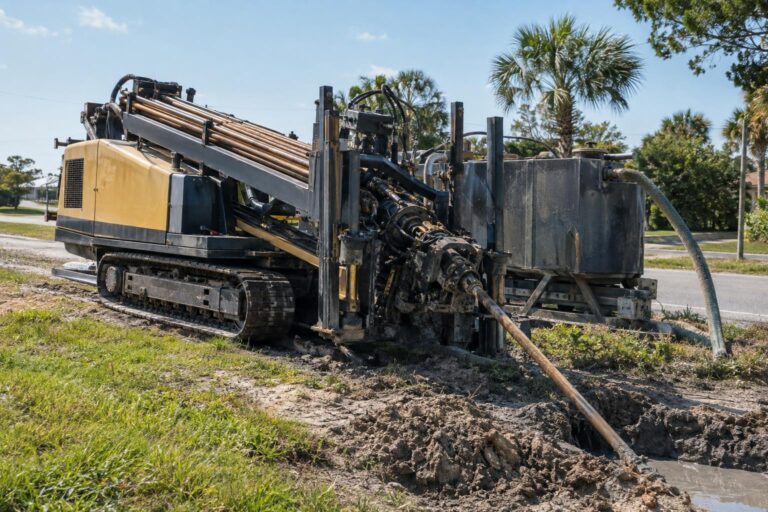
A force main often has to cross a road, canal, driveway or another utility. Horizontal directional drilling, which we perform ourselves, lets the pipe pass beneath without opening the surface. The plans usually show whether each crossing is an open cut or a bore. If they don’t, ask the engineer before bid day.
Replacing an existing line
When an old municipal line has to be replaced in place, pipe bursting and other trenchless methods can be an option. Whether that’s allowed, and under what conditions, is the utility owner’s decision, so it needs to be in the specifications.
What to Send With a Force Main Inquiry
A useful bid package for this work shows the whole system. Send these with your invitation:
- Plan and profile sheets showing alignment, depth, crossings and connection points.
- Lift station details, including the wet well, valve vault and any site work around the station.
- The utility owner’s standards, approved materials list and testing requirements.
- Connection requirements: tie-ins to existing mains, shutdowns or bypass pumping the owner expects you to price.
- Restoration for roads, sidewalks and landscaping the work disturbs.
Our underground utilities work includes force mains, lift stations, sewer and water mains, and the excavation and trenching that go with them. Plans with profiles let us price the job instead of guessing per foot.
Frequently asked questions about force mains
Do force mains have manholes?
Not along the run, as a rule. A force main is a pressurized pipe, so it normally uses valves and air release assemblies at the points the design requires, plus a manhole where it discharges to a gravity sewer. The plans for your project show exactly which structures go where.
Can you tie into a force main?
Only when the utility owner allows it and the plans show how. A tie-in to a pressurized sewer usually involves coordination, shutdown or bypass planning and an owner-approved connection detail. Don’t assume a tie-in is available because the pipe is nearby.
Is a force main a water line or a sewer line?
A force main is a sewer line. It carries pumped wastewater under pressure, which is different from a water main that carries drinking water. Both are pressurized, so they’re built to different standards and kept separate in the plans and in the ground.
How is a force main different from a gravity sewer?
A gravity sewer is sloped so wastewater flows downhill. A force main is a pressure line that carries pumped sewage, fed by a lift station. The first needs continuous grade, and the second needs a pump, valves and a pressure test.
Force main and lift station packages are easier to talk through with the profile sheets open. Call (239) 841-6400 or invite V&H to bid and send them along with the owner’s standards.