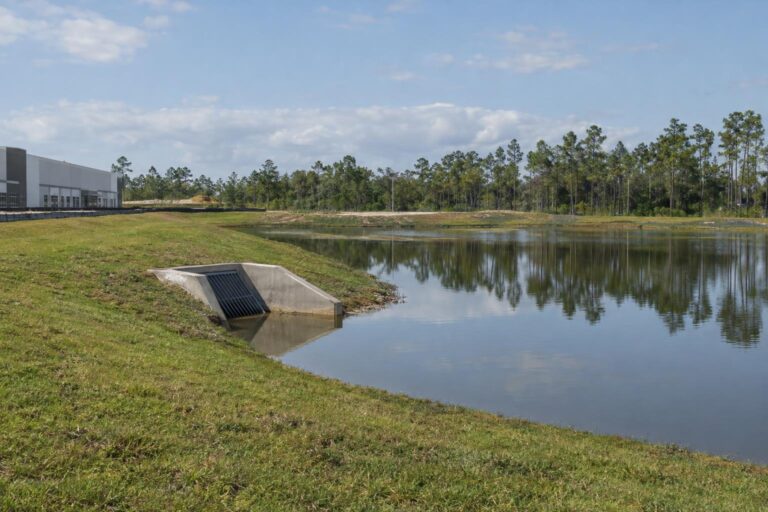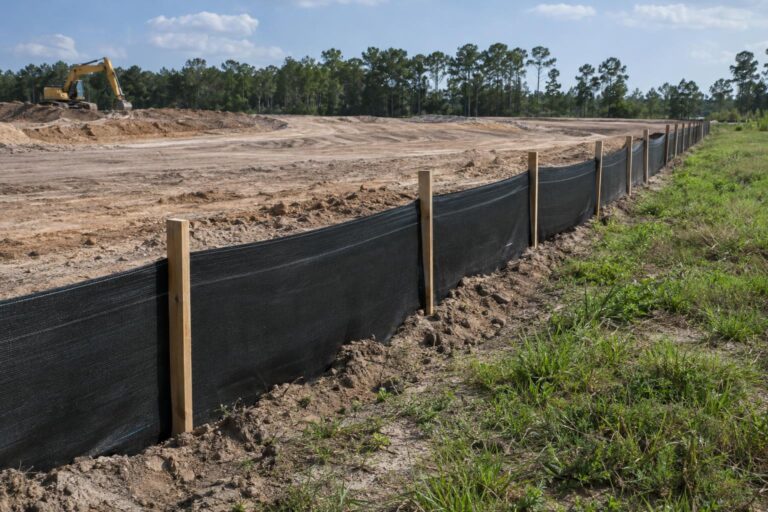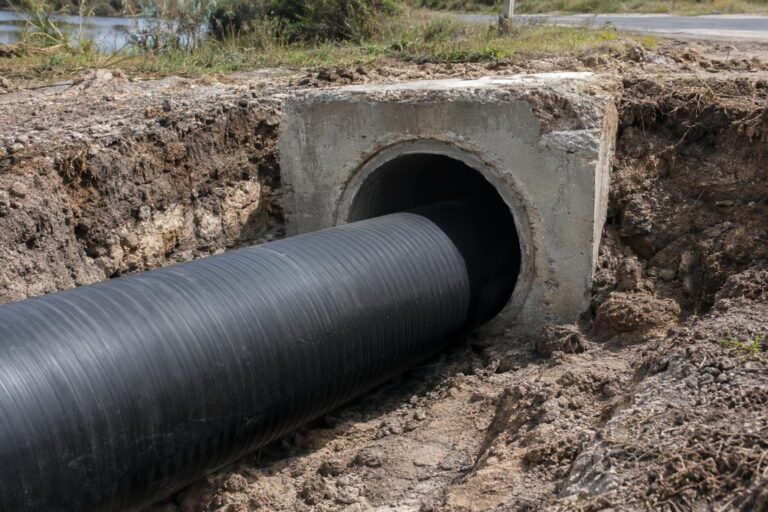
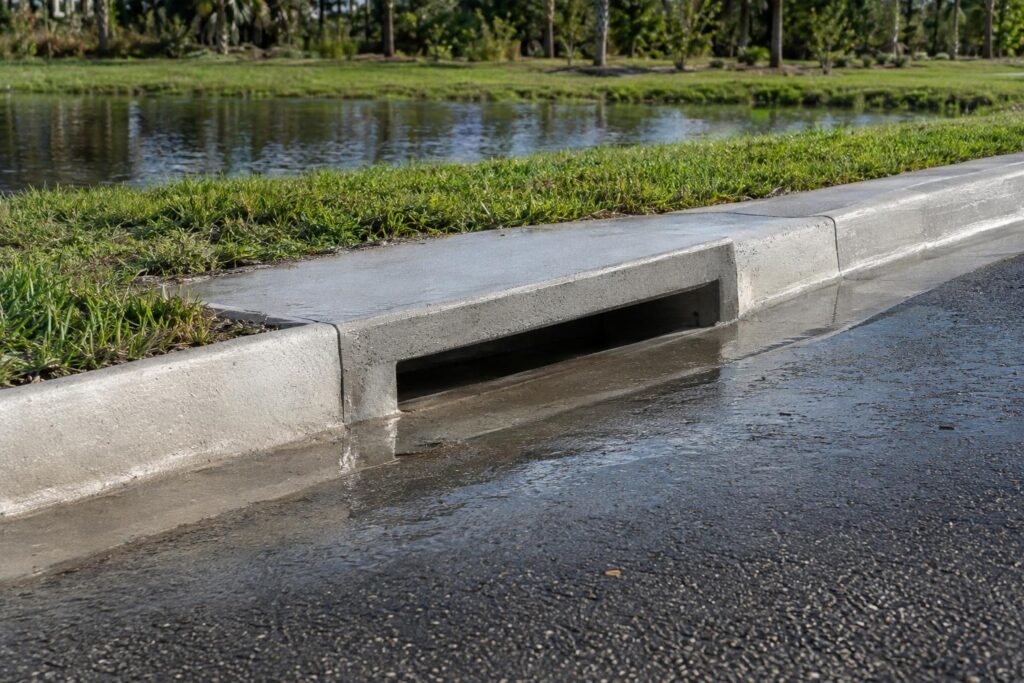
A storm drain inlet is the opening where runoff leaves the surface and enters the pipe system, and the structure underneath it carries the flow to the next pipe. The types of storm drain inlets on a set of drainage plans look similar from the road, yet each one is built for a different setting: a curb line, a parking lot, a median or a roadside swale. If you’re a general contractor or developer bidding site and roadway work, knowing which inlet goes where makes the structure schedule much easier to read.
This guide uses Florida Department of Transportation (FDOT) Standard Plans terms, since FDOT’s standards are a common reference for public road and drainage work in the state. The contract documents for your job control the details.
The Main Types of Storm Drain Inlets
Plans group inlets by how water gets in. Four families cover almost everything you’ll see on a Southwest Florida project.
- Curb inlets
- Water enters through an opening in the curb face, called the throat.
- Grate inlets
- Water falls through a grate set flush with the pavement or a gutter.
- Combination inlets
- A curb opening and a grate share one structure, so the inlet keeps taking water when the grate clogs.
- Ditch bottom inlets
- A grated box sits in the low point of a ditch, median or swale.
An inlet isn’t the same as a manhole. A manhole gives crews access to the pipe, while an inlet takes water in. Many structures do both jobs, which is why plans label them by type and number instead of by nickname.
Curb Inlets and Where FDOT Uses Them
Curb inlets sit along curb and gutter on streets and highways. FDOT numbers its curb inlets Types 1 through 10 in the Index 425-020 series, and FDOT’s Standard Plans guidance for curb inlets explains where each belongs.
- Types 1 through 4
- These are the preferred choice because they give maintenance access. Types 1 through 6 are designed for use with standard curb and gutter Type E and Type F.
- Types 5 and 6
- The instructions permit them only where right-of-way is limited or where utilities would conflict with manhole installation. They may also need modification for use with concrete pavement.
- Types 7 and 8
- These go in traffic separators, where the standard curb inlets won’t fit.
- Types 9 and 10
- They’re meant for light to moderate flows (Type 10, light flows only) where right-of-way doesn’t allow the throated Types 1 through 6. The typical use is on curb returns to city streets, and the grate is suitable for pedestrian and bicycle traffic.
One more placement rule matters on busy corners: locate inlets outside pedestrian crosswalks. If a plan shows an inlet in a crosswalk, ask the engineer of record before you build it.
Grate Inlets and Combination Inlets
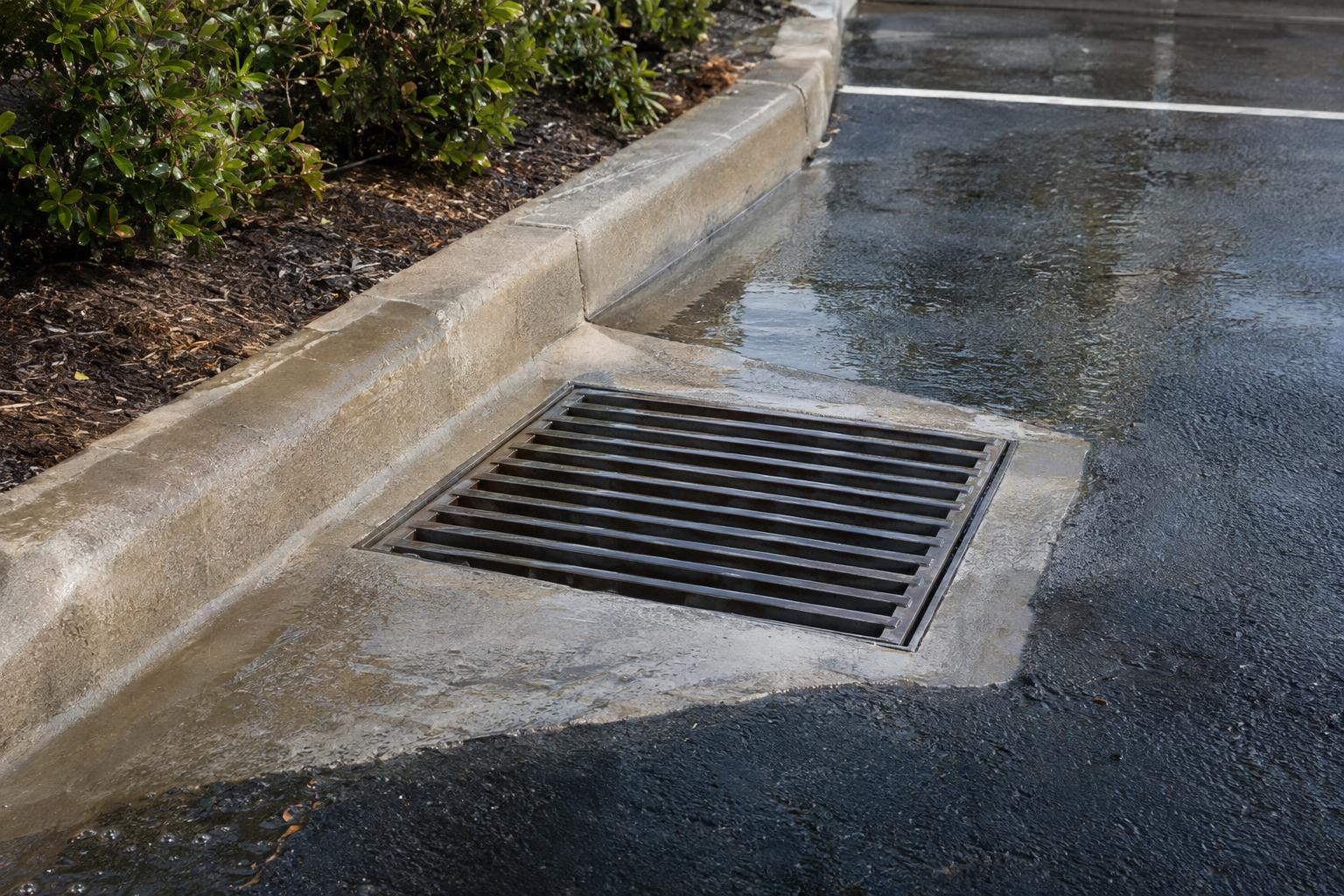
Grate inlets are the common choice in parking lots, drive aisles and valley gutters, where there’s no curb face to cut a throat into. The grate sits at the pavement surface, so the grade around it matters. A grate set high leaves water standing in the gutter, and one set low can catch wheels and pond sediment.
Grate selection depends on who and what will cross it. Bicycles, wheelchairs, delivery trucks and mowers all load a grate differently. FDOT’s ditch bottom instructions show how detailed this gets: for Types F and G in areas subject to bicycle traffic, a filler bar is installed when the clearance or gap is greater than 5/8 inch, and for Types C, D, E and H, steel grates are specified where bicycle traffic is anticipated.
A combination inlet adds a curb opening beside the grate. Designers use it on streets with steady leaf and debris loads or where a low point collects water, because the curb opening keeps working when the grate is blocked. If the plans call for one, price both the grate frame and the curb throat, and check how the top fits the adjacent curb and gutter.
Ditch Bottom Inlets in Swales and Medians
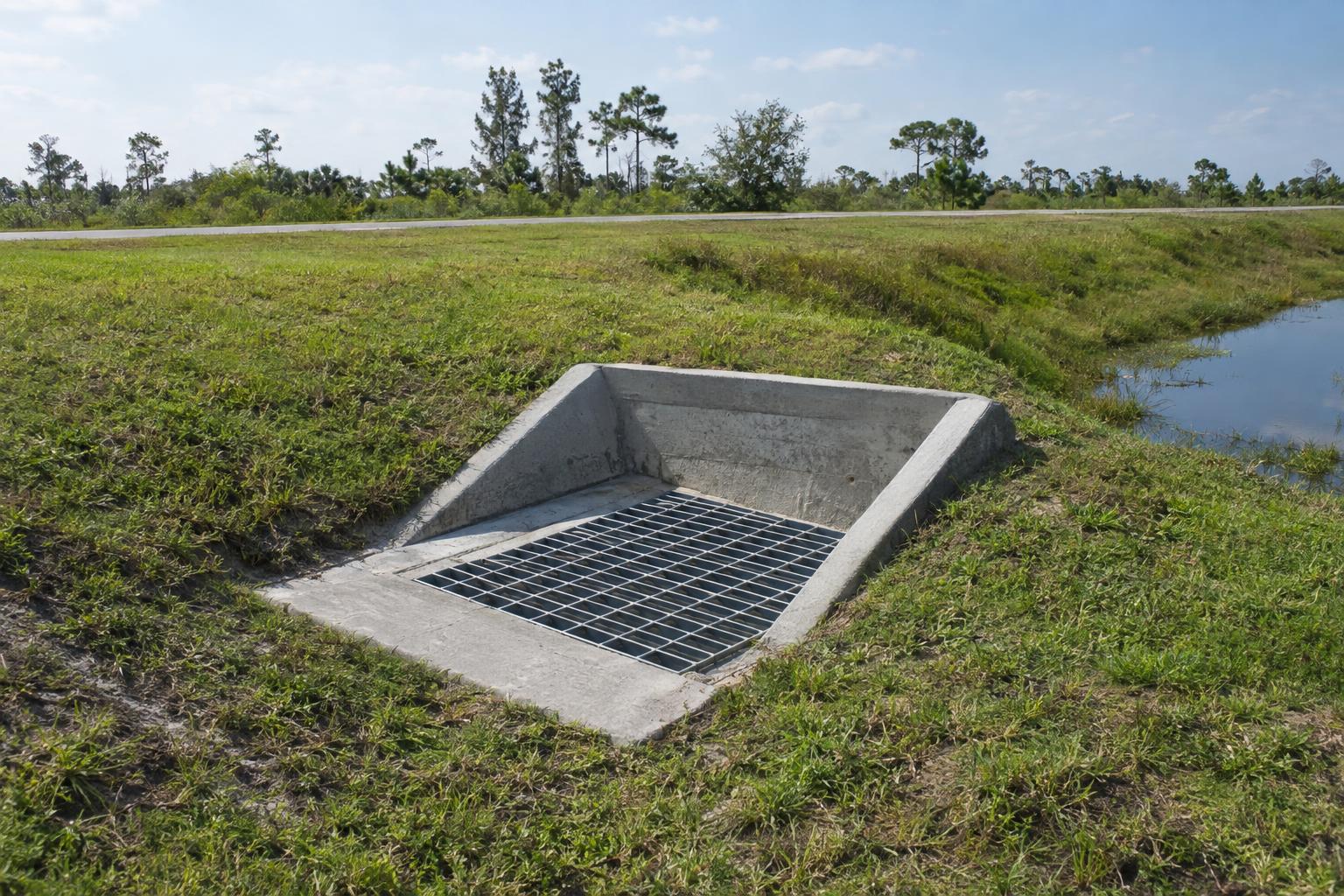
Much of Southwest Florida drains through swales and shallow ditches, so ditch bottom inlets are everywhere on road projects. FDOT divides them into several types, and the instructions state what each is for.
- Type B
- It’s intended for ditches, medians and other areas subject to traffic loads, and it isn’t suitable for bicycle traffic. The instructions call for full grate and horizontal slot designs for new construction.
- Types C, D, E and H
- FDOT’s Index 425-052 instructions describe them as suitable for bicycle traffic and for ditches, medians and areas with infrequent traffic loadings, not places with repeated heavy loads. Inlets with minimal debris should be built without slots, and where debris is a problem they should have slots.
- Types F and G
- These are designed for ditches, medians and pavement areas subject to heavy traffic loading, minimal debris and bicycle traffic.
Slots add another plan detail. Under the Index 425-052 instructions, slotted inlets within roadway clear zones and areas subject to pedestrians must have traversable slots, and that traversable slots aren’t used where occasional bicycle traffic is expected. Check the plans for slot type at each location, because the wrong top is an expensive change after the concrete is poured.
In a ditch the structure is only half the job. The swale has to be graded to the inlet, the surrounding slope stabilized and the turf established, or the ditch erodes around the box. Field crews check the flow line into the box before the sod goes down.
What to Check on the Drainage Plans
Once you know the types of storm drain inlets, the structure schedule becomes a quick checklist.
- Type and index number
- Confirm the standard each inlet references and whether the plans modify it. FDOT’s instructions call for modifying curb inlet details for inlets built on a curve.
- Top and rim elevations
- They set how the surface drains to the structure.
- Pipe size and fit
- The standard lists recommended maximum pipe sizes for concrete pipe, and other pipe materials must be checked for fit. Large or multiple pipe connections may need a different bottom detail.
- Traffic loading
- A grate in a drive aisle isn’t the same as one in a landscaped median.
- Maintenance access
- Ask where crews will clean the structure and whether a vacuum truck can reach it.
- Pay items
- Public jobs pay inlets by the each, and the pay item names the type.
When existing inlets fail, the fix is often a rebuilt top, wall or pipe connection and not a full replacement. Our storm drain repair crews handle inlets, manholes and structures, and our drainage work covers new inlets, culverts and swales.
Frequently asked questions about storm drain inlets
What is a Type C inlet in Florida?
In FDOT Standard Plans, Type C is a ditch bottom inlet covered with Types D, E and H in Index 425-052. Other agencies number their inlets differently, so a Type C on a county or private plan can mean something else. Check the detail the plans reference.
What’s the difference between an inlet and a catch basin?
An inlet is the opening that admits surface water. People often use “catch basin” for an inlet structure, sometimes one with a sump below the outlet pipe to collect sediment. Usage varies by agency, so follow the term in the plans and specifications.
Which inlet works best on a curb and gutter street?
The engineer of record decides, based on flow, spacing and site constraints. FDOT’s instructions prefer Types 1 through 4 for maintenance access and limit Types 5 and 6 to tight right-of-way or utility conflicts.
Can a ditch bottom inlet go in a paved area?
Some types can. FDOT designs Types F and G for ditches, medians and pavement areas with heavy traffic loading, but Type B is for areas subject to traffic loads with occasional pedestrians, and the plans state which top to build.
A structure schedule and plan sheets give us what we need to start the conversation. Call (239) 841-6400 or invite V&H to bid and we’ll go through each inlet’s type, top and pipe connection with you.