Mechanical dredging removes sediment from the bottom of a canal, basin or channel with a bucket, usually a clamshell or an excavator bucket working from a barge or the bank. Owners reach for it when a waterway has silted in, an outfall is choking or a boat basin has shoaled. Below we explain how the method works, how it differs from hydraulic dredging, and what the permit and water-quality side looks like in Florida.
We’ll keep it practical for public works staff, engineers and general contractors who need to scope a dredging package. The permit set and the agencies’ conditions control the actual work.
How Bucket Dredging Works
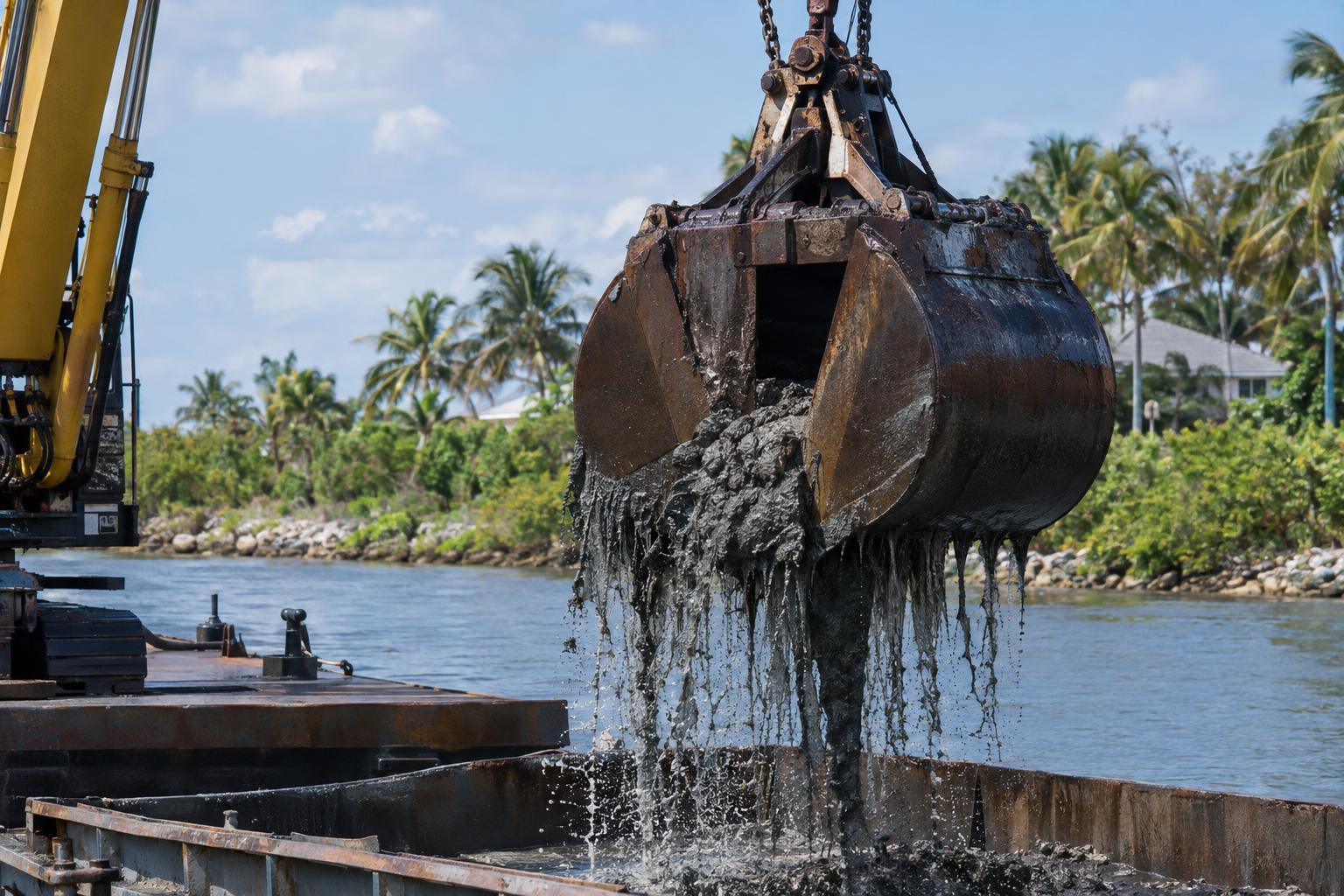
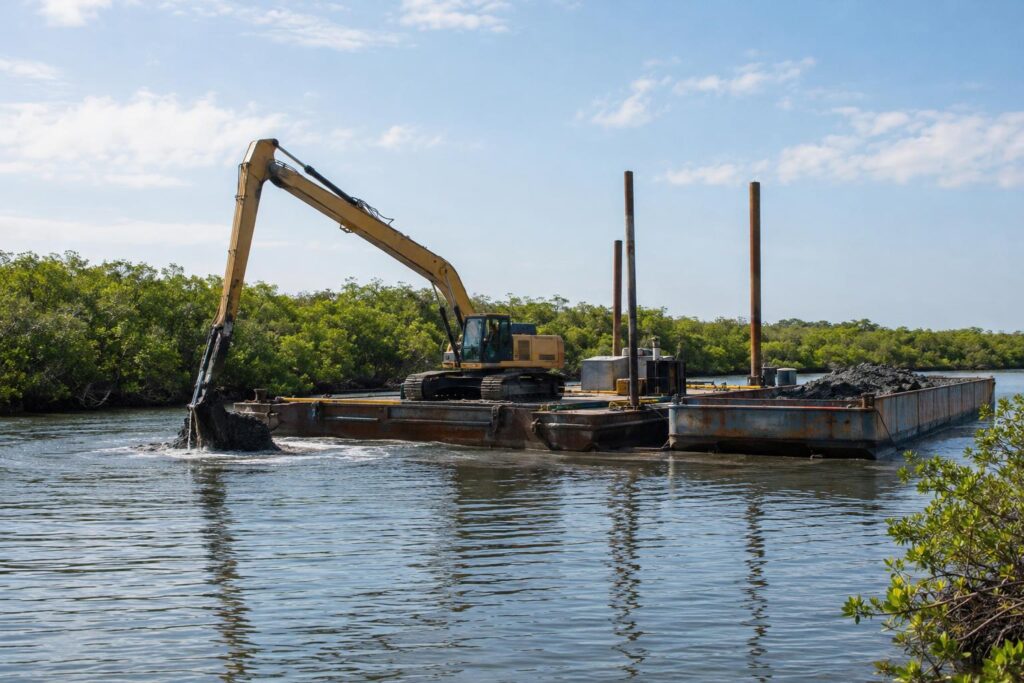
The equipment is simple to describe. A bucket is lowered to the bottom, closed on the sediment, lifted through the water column and swung over a material barge or a bank placement area. The machine can sit on a flat barge held in position by spud poles, or on the bank if the reach allows.
Because the bucket takes in sediment rather than a slurry, the material comes up as wet solids rather than as a large volume of water carrying silt. That’s the main practical contrast with hydraulic work, and it affects everything downstream: handling, hauling and where the material can go.
Where it fits well
Mechanical dredging tends to suit jobs where access, precision and handling matter more than raw production. These are the situations that come up most often in canal and outfall work.
- Canals and ditches
- Narrow waterways, residential-style canals and drainage channels where a pipeline run isn’t practical.
- Around structures
- Near seawalls, docks, outfalls and culvert ends where the operator needs to place the bucket precisely.
- Debris-prone areas
- A bucket can pick up some debris that would foul a hydraulic cutterhead, though debris also changes how well a bucket closes.
- Small to mid-size volumes
- Short reaches and spot removal rather than long channel campaigns.
Mechanical Dredging vs. Hydraulic Dredging
Hydraulic dredges loosen sediment with a cutterhead or similar device and pump it away as a slurry through a pipeline. Mechanical dredges lift it with a bucket. A third category, the hopper dredge, is used mostly in navigation channels, so it rarely comes up for canal work.
Here’s how the two compare on a typical scoping call:
- Water in the material
- A pipeline delivers a lot of water with the sediment, so a hydraulic job needs a placement area and a way to manage that water. Bucket dredging hands you wetter solids that can be loaded and hauled.
- Space and access
- A pipeline route and a containment area take space. A barge-mounted bucket needs enough water depth and a place to tie off and offload.
- Precision
- A suspended clamshell can be harder to place exactly than an excavator bucket, which is one reason the equipment choice is part of the plan.
- Production
- Long channels with large volumes usually favor pipeline work. Short reaches, canals and work around structures usually favor buckets.
Neither method is automatically better for water quality. A U.S. Army Engineer Research and Development Center paper on dredging-related resuspension, hosted by EPA, says the operator and the site matter a great deal. Bucket drop speed, overfilling the bucket and excessive cut depth can raise resuspension, and so can cutterhead and swing speed on a hydraulic dredge. It also says very soupy sediments resuspend more easily and that debris can keep a clamshell from closing and sealing.
Permits Before the Barge Moves
Dredging in Florida waters usually involves a federal and a state layer. Our role is building to the permits, and the owner or the owner’s engineer obtains them, so treat the next two paragraphs as orientation, not legal advice.
Federal: the Army Corps
EPA’s overview of the Clean Water Act Section 404 program says Section 404 requires a permit before dredged or fill material may be discharged into waters of the United States. It adds that the U.S. Army Corps of Engineers handles the permit program day to day, while EPA develops policy and criteria and reviews and comments on individual applications. Where dredged material is placed, and whether it goes back in the water, is therefore a permit question, not only a construction choice.
State: FDEP and the water management districts
Florida’s Environmental Resource Permit program regulates activities that alter surface water flows, including dredging and filling in wetlands and other surface waters. FDEP’s Environmental Resource Permitting page says applications and state-owned submerged lands authorizations are processed by FDEP district offices or one of Florida’s five water management districts, with operating agreements specifying which agency handles each type.
In our market, the South Florida Water Management District covers most of our service area, and the Southwest Florida Water Management District covers DeSoto and Sarasota counties and much of Charlotte County. Which agency processes your application is something the owner’s engineer settles at the start. Whether a canal cleanout needs an individual permit, a general permit or qualifies for an exemption is also the engineer’s call with the agency, so don’t assume maintenance dredging skips the process.
Turbidity and Water Quality Controls
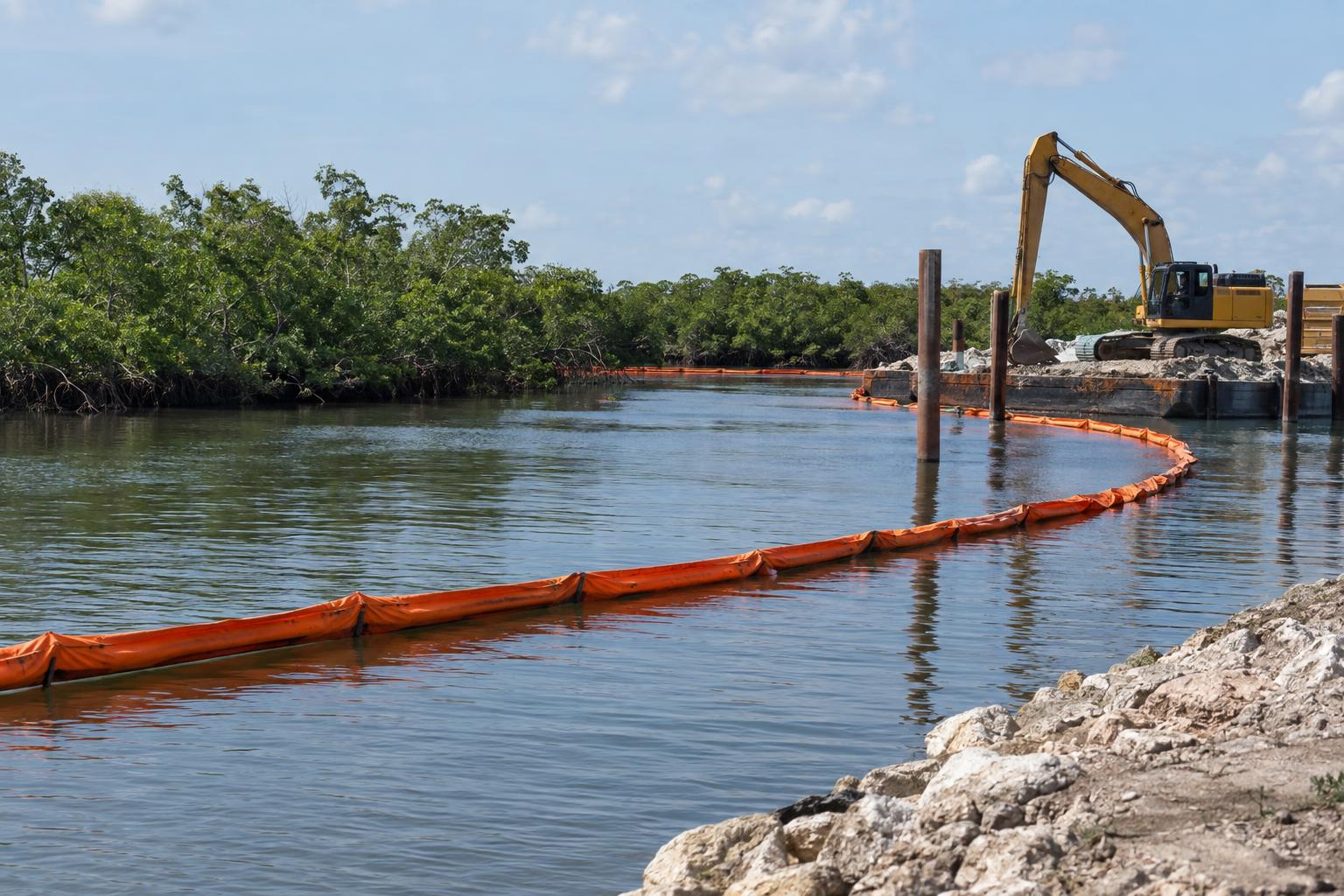
Digging sediment makes the water cloudy for a while, and Florida limits how cloudy. Rule 62-302.530 in the Florida Administrative Code lists turbidity in its surface water criteria table at less than 29 NTU above natural background conditions. NTU stands for nephelometric turbidity units, a measure of how much light the particles in the water scatter.
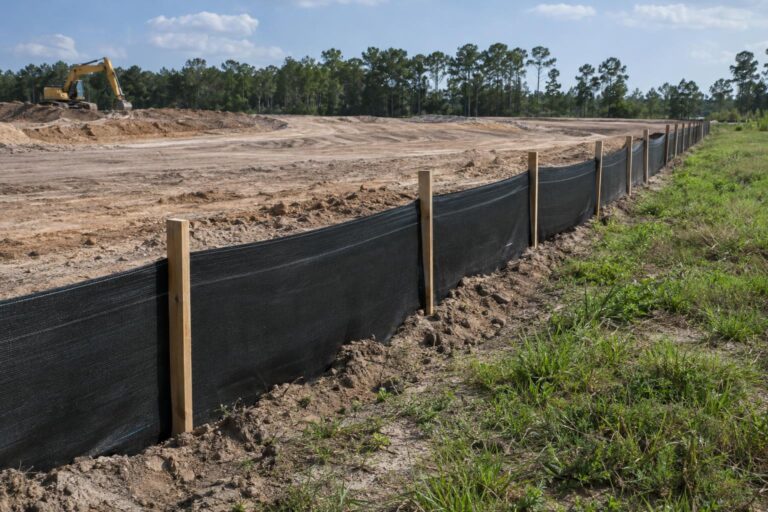
Permit conditions turn that number into field work. The plans and permit usually spell out turbidity barriers, the monitoring points and what happens if readings climb. A floating turbidity curtain around the work area is the familiar piece of that, and the contractor’s job is to install it, keep it in place and stop or adjust when the monitoring says so.
Operator discipline helps as much as the curtain. Slower bucket speed through the water column and avoiding overfilled buckets, the factors the research above points to, are the kind of practices a dredging plan should address up front.
Scoping Dredging With a Contractor
A good dredging inquiry includes more than a quantity. Before a bid, gather:
- The permit set, with conditions for turbidity, placement and any seasonal or species limits.
- Pre-dredge survey or bathymetry showing existing and required depths.
- Sediment information, including whether testing is complete.
- The offloading and placement or disposal location and haul route.
- Access for a barge and equipment: launch points, water depth and bridge or culvert clearances.
Our marine construction scope includes mechanical dredging alongside seawalls, sheet pile, docks and boat ramps, and the permit conditions often connect to the adjoining structure work. When the problem is a silted outfall or drainage canal, drainage construction may be part of the same package.
We build to the documents your engineer issues, and the owner or the engineer of record handles design and permit applications.
Frequently asked questions about dredging
What are the main types of dredges?
The two broad categories are mechanical, which lifts sediment with a bucket, and hydraulic, which pumps a sediment and water slurry. Hopper dredges are a third category, used mostly in navigation channels. Which one fits depends on volume, access, material and where the material goes.
How does a river dredge work?
A hydraulic dredge uses a cutter or similar head to loosen material and a pump to move it as slurry. A mechanical dredge lowers a bucket, closes it, lifts it and swings it to a barge or placement area. Either way the plans define depths, limits and placement.
What are the downsides of dredging?
The main concerns are turbidity, resuspension of sediment, the handling and placement of the dredged material. Those are why permits set monitoring and placement conditions. Planning equipment and bucket practices around them reduces the effect but doesn’t remove it.
Does dredging need a permit in Florida?
Typically yes. Section 404 of the Clean Water Act requires a permit before dredged or fill material is discharged into waters of the United States, and Florida’s Environmental Resource Permit program covers dredging in wetlands and other surface waters. The owner’s engineer confirms which permits and exemptions apply to the specific waterway.
Call (239) 841-6400 or invite V&H to bid with your permit set and survey, and we’ll price the bucket work, barge access and placement around the conditions as written.