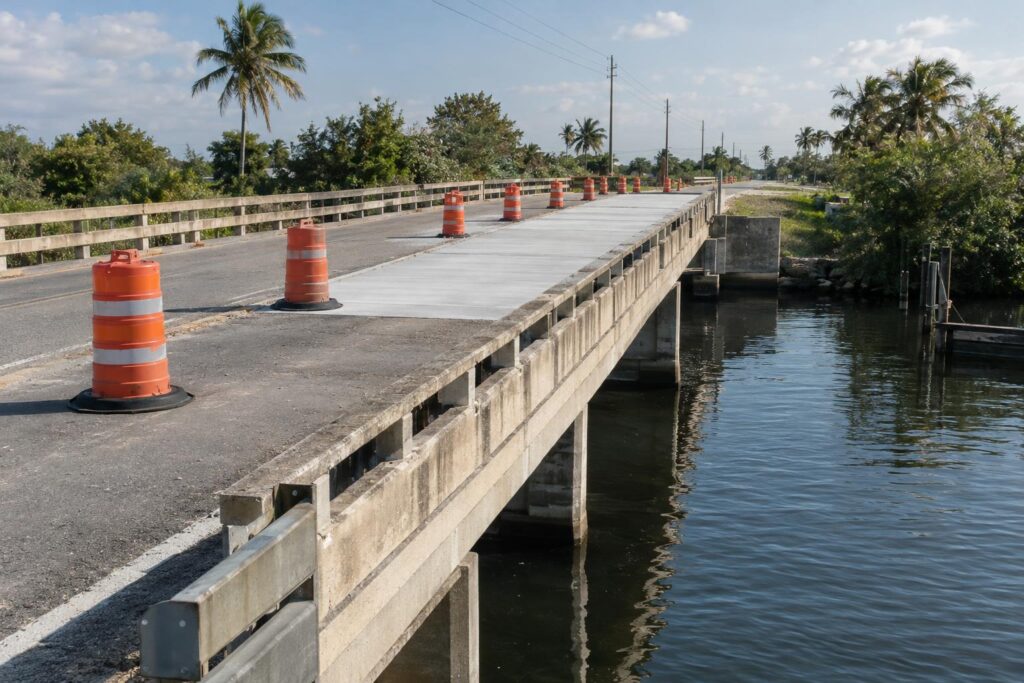
A bridge deck overlay is a new layer placed over the existing concrete deck. It renews the riding surface and, depending on the type, shields the concrete and its reinforcing steel from water and chlorides. Owners reach for it when the structure underneath is still sound but the surface is wearing out, cracking or letting moisture in. Below, we walk through when an overlay makes sense, the main types from FHWA’s survey of state transportation departments, and how the work is usually staged.
When a bridge deck overlay makes sense
The deck is the slab that carries traffic, and it takes the most abuse on any bridge. Cracks let water and chlorides reach the reinforcing steel, which is how corrosion typically starts. Chlorides come from deicing salts in cold climates and from salt exposure near the coast. An overlay either seals that path or replaces a worn wearing surface before the damage reaches the structure.
Owners decide by inspecting. FHWA reports that every state transportation department uses visual inspection on decks and overlays, with chain drag or hammer sounding as the most common follow-up when a problem is suspected. Some use ground penetrating radar, infrared thermography or cores. Those findings tell the engineer how much of the deck is deteriorated, which informs the choice among an overlay, deck repair, a more extensive rehabilitation or replacement.
An overlay isn’t a structural fix. If the girders, bearings or substructure are the problem, the work becomes repair and rehabilitation instead. Our bridge construction page covers both, and our FDOT prequalification includes the Bridge Deck Overlays work class.
Overlay types from FHWA’s survey of state agencies
FHWA’s Long-Term Bridge Performance summary, drawn from a 2013 survey of the 52 state transportation departments, lists the overlay and sealer types states have tried. Use it as a map of the options, not a recommendation. The owner’s engineer selects the system, and the contract documents name it.
The type matters to a bidder because each one asks for different equipment. FHWA notes that latex-modified overlays need mobile mixers, low-slump overlays need special vibrating finishing screeds, and silica fume overlays need bagged silica fume added to the ready-mix truck or a special storage tank at the concrete plant. Those requirements affect mobilization and material sourcing before any lane closes.
Asphalt overlays, with or without a membrane
Asphalt is the most widely tried type. FHWA lists ease of use, relatively low cost and better rideability as benefits. The challenges are added dead load on the bridge, disbonding from the concrete deck and trapped water or chlorides beneath the asphalt. A membrane system adds a primer, a sheet or liquid waterproofing membrane and a tack coat under the asphalt wearing surface.
Latex-modified concrete
Latex-modified concrete (LMC) is portland cement concrete with a latex polymer admixture, typically styrene-butadiene, mixed in a mobile mixer. FHWA reports much lower chloride permeability than conventional concrete. It also reports moist curing for a period of hours, such as 48 to 60, followed by air curing until the required strength is reached. The longer wait before opening to traffic is the trade-off.
Silica fume and low-slump dense concrete
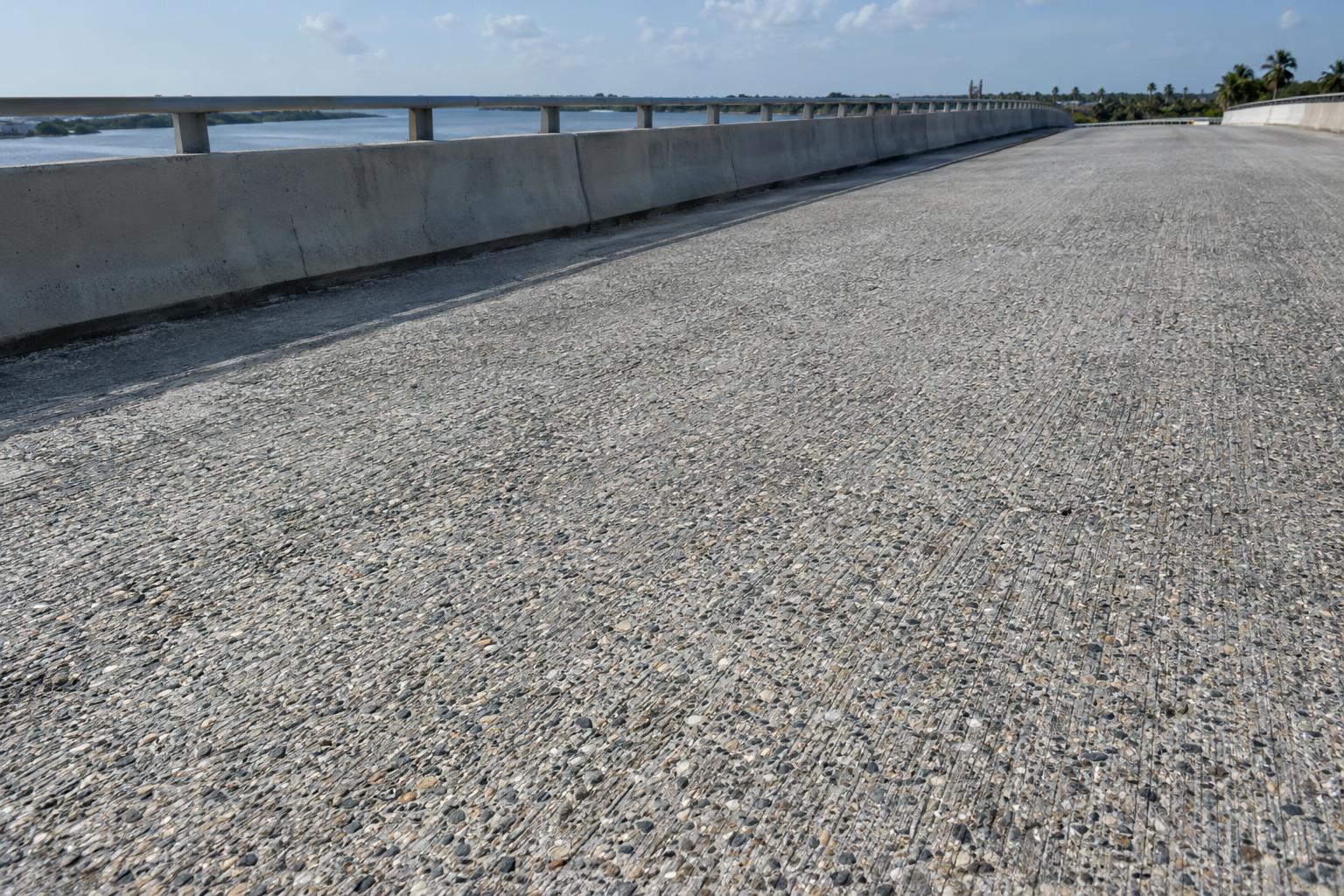
Silica fume overlays add silica fume (microsilica) to a concrete mix and typically have very low permeability. They’re stickier to place and need special curing to reduce shrinkage cracking, and FHWA notes that curing may take seven or more days. Low-slump dense concrete overlays, generally one inch of slump or less, also have low permeability but long cure times and can be hard to place.
Polymer overlays
Epoxy and polyester polymer overlays use a polymer resin rather than portland cement as the binder. Epoxy overlays are thin, about 0.25 to 0.5 inch, and typically cure in about three hours at 70 degrees Fahrenheit. FHWA notes their life may be limited under heavy traffic.
Polyester overlays are normally placed in layers of 0.5 to 1 inch, cure in about one to five hours and require a primer. They generally shouldn’t be placed below 50 degrees Fahrenheit unless the manufacturer says otherwise. Fast cure times make polymer systems attractive when lanes can’t stay closed long, and that is often the reason an owner picks one.
Portland cement concrete and sealers
A portland cement concrete overlay uses the same kind of mix as the deck. The advantage is similar mechanical and thermal behavior. The challenge is that the overlay can shrink differently from the deck, and it can inherit the performance problems of the concrete beneath.
FHWA also covers sealers, such as high molecular weight methacrylate and silane. Those are surface treatments rather than overlays, and an owner may specify one on its own or alongside an overlay.
How overlay work gets staged
The sequence depends on the system, but the pattern repeats. Crews prepare the surface, place the overlay, cure it and open the lanes. What changes is how long each step takes.
Latex-modified and silica fume concrete need curing time measured in days. Polymer systems turn over in hours, but each batch has a short working life and temperature limits apply. The FHWA summary also notes that membrane primers need a clean, dry deck before they go on, which is why deck preparation gets its own line in the schedule.
Traffic drives the schedule. On many two-lane bridges, crews build half the width at a time so traffic can use the other half, though the plans decide that. Lane closure windows, detours and flagging all come from the maintenance of traffic sheets.
Because curing time can control how soon lanes reopen, closure windows should be reviewed alongside the overlay type in the contract. Roadway approaches and tie-ins fall under our roadwork scope, which is where traffic control and paving meet the bridge.
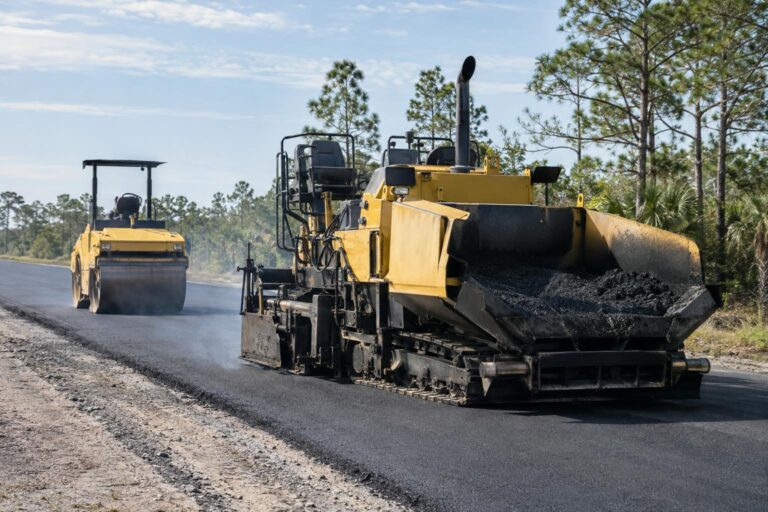
Asphalt on a bridge has its own rule. FDOT’s Standard Specifications say to compact asphalt placed over bridge decks and approach slabs with static compaction only, with no vibratory mode. A paving plan built for roads needs that adjustment on a bridge.
Finishing the deck: joints, barriers and approaches
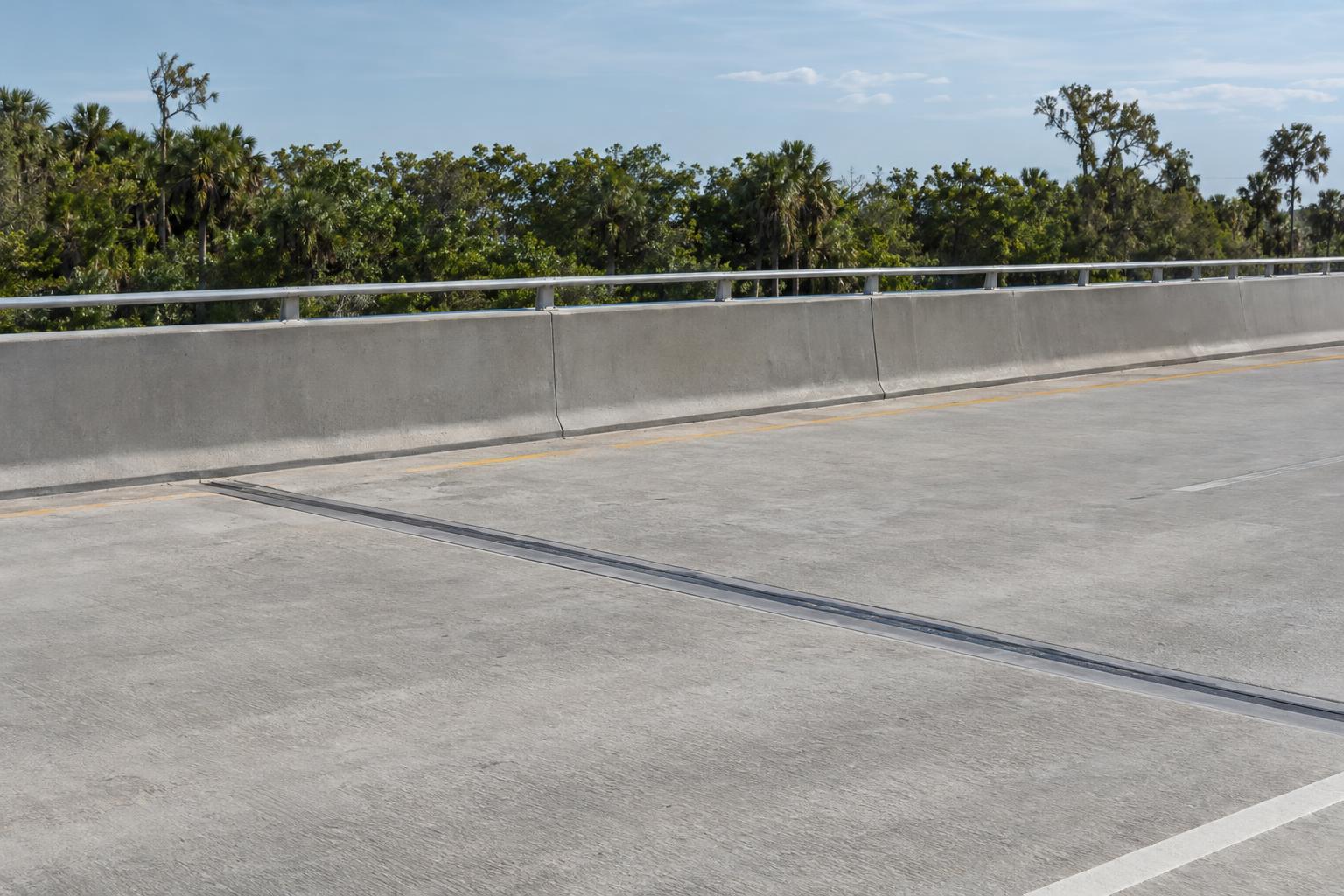
The finished surface has to meet things that don’t change: expansion joints, the barrier or railing along the edge, drainage at the deck and the approach slabs at each end. An asphalt overlay adds dead load and changes the grade at joints and approaches. A thin polymer overlay changes the grade very little. Either way, the plans show the final profile, and the details at each joint decide whether the ride is smooth.
A complete inquiry for a deck overlay includes the structural plans, the condition or inspection report, the specified overlay system, traffic control requirements and the construction window. Give the bid due date separately from the construction dates. We build to the plans, and the owner’s specification controls the material, the cure and the acceptance test. For background on the overlay options, see FHWA’s summary on overlays and sealers, and for the asphalt compaction rule on bridge decks, FDOT’s Standard Specifications.
Frequently asked questions about bridge deck overlays
How long before traffic can use a new overlay?
It depends on the type. FHWA reports cure times of roughly one to five hours for polymer overlays, 48 to 60 hours of moist curing for latex-modified concrete, and seven or more days for silica fume overlays. The contract states the strength or age required before opening.
Is an overlay the same as replacing the deck?
No. An overlay adds a layer over a deck that is staying in place. Replacement removes the deck. When deterioration goes deeper than the surface, the engineer may call for repair of the existing concrete first, or for a larger rehabilitation.
Which overlay type is best?
No single type wins everywhere. FHWA’s summary shows states using many types with mixed results, and it notes that some state specifications let the contractor choose among allowed systems. On most public jobs, the engineer names the system, so the plans tell you what to price.
Does V&H build deck overlays?
Yes. Bridge Deck Overlays is one of our FDOT-prequalified work classes, alongside minor and intermediate bridges and their repair and rehabilitation. Owners can confirm current classes on FDOT’s prequalified contractor list.
Call (239) 841-6400 or invite V&H to bid when your overlay plans and inspection report are ready, and we’ll tell you what else we need to price the staging.