Cured in place pipe lining rebuilds a failing storm pipe from the inside. A resin-saturated felt tube goes into the old pipe, hardens against the wall and becomes a new, jointless pipe within the old one, so the road, parking lot or utility corridor above stays in place. This article is for public works staff, property managers, general contractors and engineers who maintain storm pipe under roads and commercial sites and want to know whether this method fits a given run.
Lining isn’t a cure-all. It works on pipe that has kept its shape, and it comes with hydraulic, access and inspection requirements that belong in the bid documents from the start.
How Cured in Place Pipe Lining Works
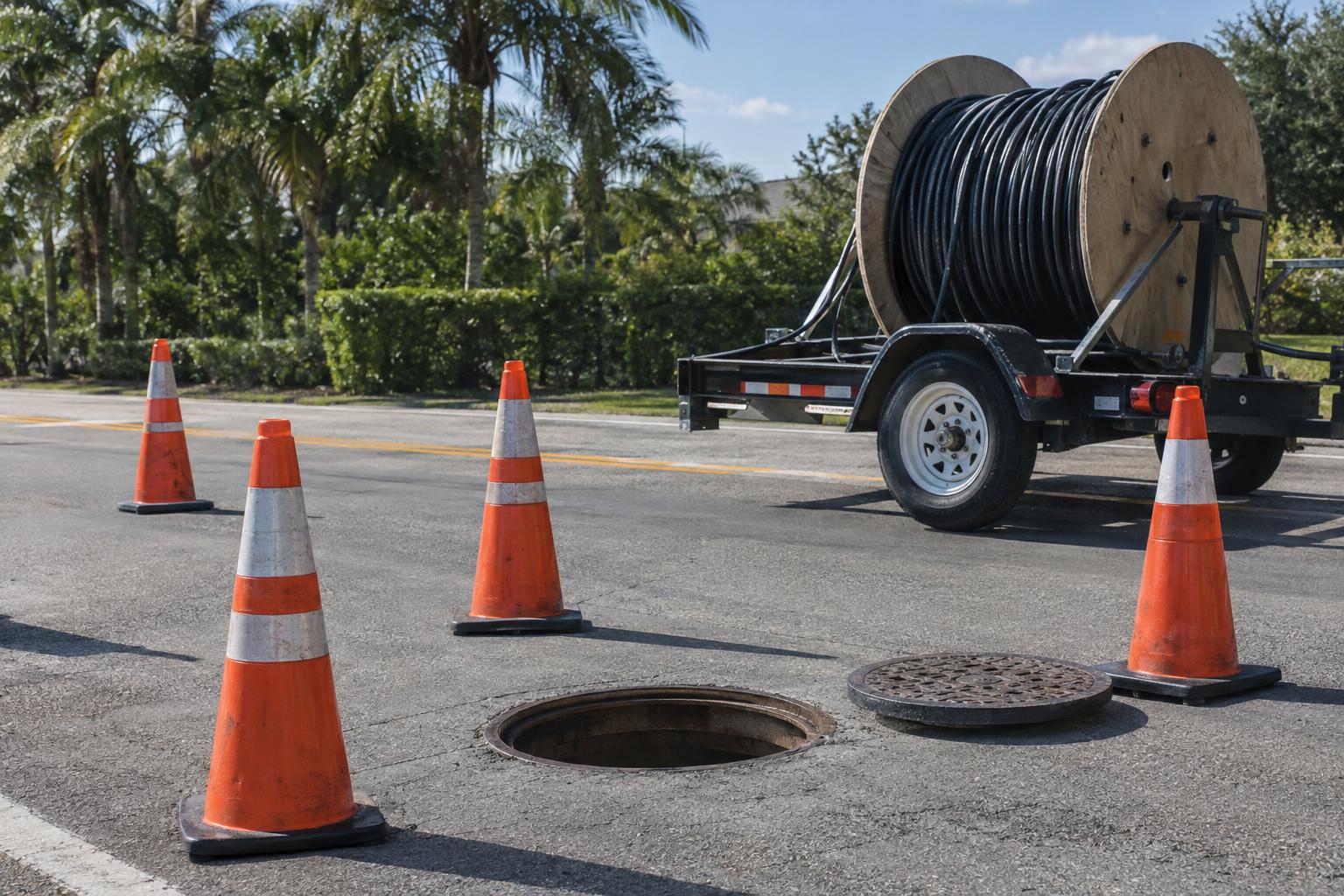
The process runs from one manhole or structure to the next. Florida’s Department of Transportation (FDOT) writes the sequence into Section 431 of its Standard Specifications, and public owners tend to follow a similar order.
- Inspect. The host pipe is inspected by closed circuit television before any liner goes in. FDOT requires the pipe to be clean, dry and stable first.
- Clean, dewater and stabilize. The crew removes silt and debris, dewaters the run and handles the flow. FDOT’s specification also calls for sealing cracks and joints with an approved chemical grout and placing flowable fill where the Engineer directs, to keep the host pipe stable.
- Install the liner. A resin-impregnated felt tube is installed into the pipe, either inverted (turned inside out as it goes in) or pulled in. FDOT’s inverting method follows ASTM F1216.
- Cure. The resin hardens, and the tube sets tight against the old pipe wall.
- Reopen and verify. The ends are finished, any connecting pipes or structures are reinstated, and the complete rehabilitation is inspected again by closed circuit television. FDOT requires the Engineer to receive videos of the preliminary and final inspections.
Most of that work happens at the access structures, so the visible footprint on the road is small: a closed lane or parking area around a manhole, the equipment staged nearby and a traffic control plan. That’s a real advantage on a busy arterial or a shopping center with tenants to keep open. It still needs a schedule, because cleaning, dewatering, curing and the final video inspection each have to finish before the run goes back into service.
You can read the Florida language in FDOT’s FY 2026-27 Standard Specifications, Section 431 (Pipe Liner). Your contract may use FDOT’s text, a county standard or a custom specification, so the contract documents control.
When Lining Fits a Storm Pipe
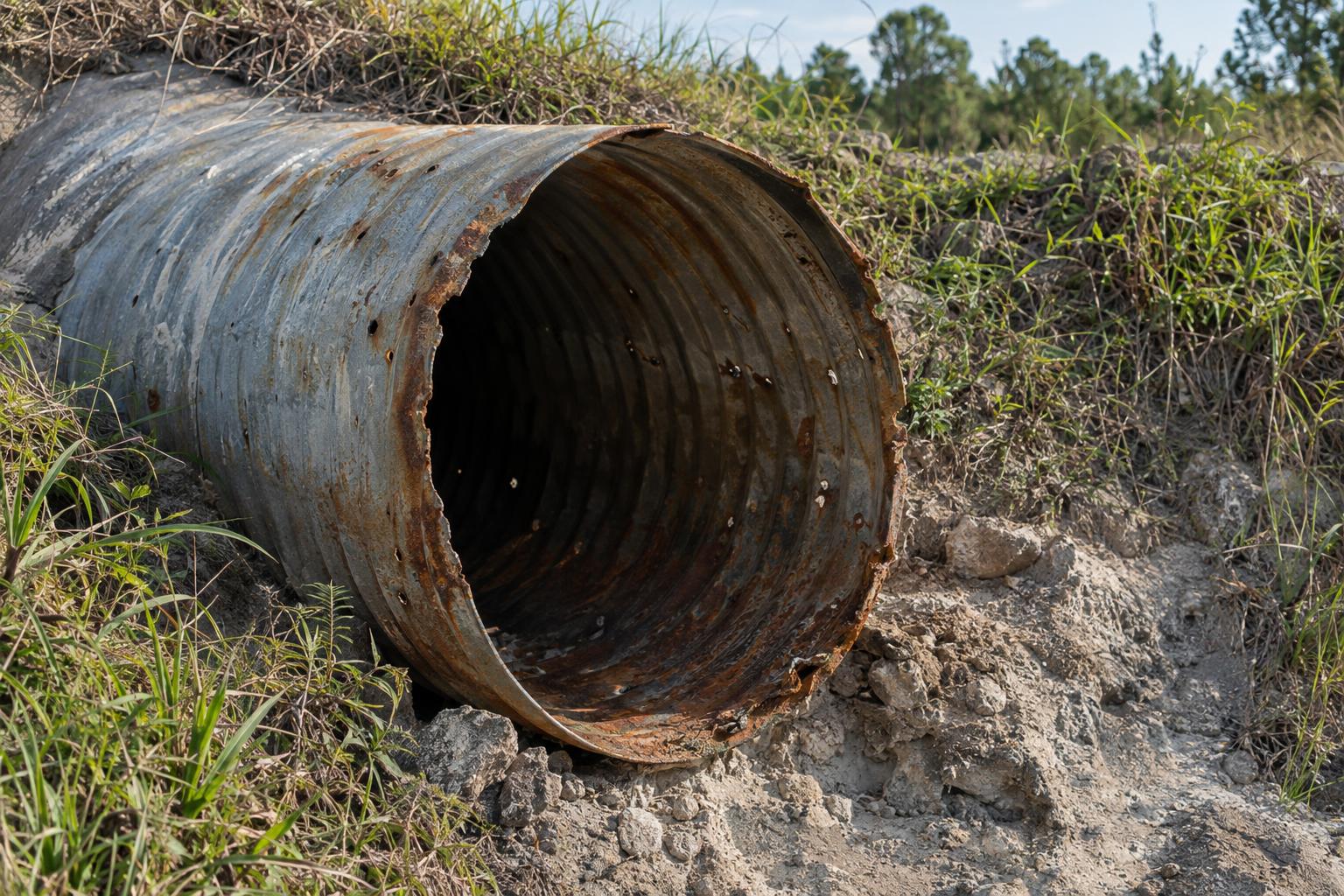
Lining is a good candidate when the pipe still holds its shape and the trouble is in the wall or the joints. Typical situations on public and commercial systems include:
- Cracked concrete pipe
- FDOT’s Pipe Repair Matrix lists pipe lining under Section 431 among the accepted repairs for cracks in steel reinforced concrete pipe.
- Leaking joints
- The same matrix lists lining for leaking joints in concrete pipe and for joint gaps and leaks in metal pipe.
- Corroded corrugated metal pipe
- Rust and pinholes through the bottom of the pipe can show up on older metal storm lines.
- Pipe in hard-to-dig locations
- A line that runs under a busy intersection, a building apron or utility congestion is expensive to open-cut, which is where trenchless methods earn their place.
Lining doesn’t fit every failure. A collapsed or badly deformed pipe needs replacement, and so does a run with a void or washout that the liner can’t bridge. A video inspection is how you tell the difference, run by run.
Lining or replacement
Owners usually decide between the two on a few practical points. Lining wins when the pipe is deep, the surface above it is costly to restore or the utilities around it make a trench risky. Replacement wins when the pipe is undersized for today’s runoff, because a liner can’t make the pipe bigger. It also wins when the video shows settled joints, sags or missing pipe, or when the surrounding site is being rebuilt anyway and the trench is already open.
Point repairs are a separate question
If only a short section is damaged, owners sometimes ask for a patch liner. Florida DOT’s Pipe Repair Matrix states that the Department does not accept cured-in-place pipe point repairs, and that cured-in-place pipe repairs must be installed in accordance with Section 431. You can read that guidance in FDOT’s Pipe Repair Matrix. For a private owner the agency rule doesn’t apply directly, but it signals how seriously a state agency treats short liners.
Limits to Plan For
The common questions in a lining bid aren’t about the resin. They’re about flow, connections and inspection.
- Flow during the work
- The pipe has to be dry enough to line, so the contract should say whether the crew pumps around the run or works between storms.
- Hydraulics
- A liner takes a little space off the inside diameter, but its smooth wall can change how the pipe carries water. State pipe liner manuals, such as the North Carolina DOT Pipe Liner Manual, require hydraulic calculations comparing the existing pipe to the lined pipe, and your engineer should run the same comparison.
- Connections
- Every inlet, lateral or junction that enters the run needs a reinstatement plan.
- Structural design
- The engineer of record sets the liner thickness and design basis. We install to the specified product and standard.
- Ends and structures
- The liner ends need to be sealed and finished at the manholes, headwalls or inlets so water doesn’t track behind the liner.
Cost drivers are the same on most lining jobs: pipe diameter and length, the cleaning and dewatering needed, flow control, how many connections are reinstated, traffic control at the access points and the inspection deliverables. We don’t publish prices because every run is different.
What to Send With a Lining Inquiry
Lining stands or falls on the inspection data. When you send a package, the following items let us price the real condition of the pipe instead of guessing:
- The closed circuit television inspection or condition report, with footage if available.
- Pipe size, material, depth and run length between structures.
- A map showing access points, traffic restrictions and any utilities nearby.
- Whether the system must keep carrying flow, and the required repair window.
- The specification section that governs the liner product and testing.
Our storm drain repair work includes lining in both cured-in-place and slip lining forms, plus the inlet, manhole and outfall repairs that usually go with it. New storm systems, culverts and structures fall under our drainage work, which includes the FDOT-prequalified drainage class. If the inspection shows a pipe that can’t be lined, the same crews can replace it.
Frequently asked questions about cured in place pipe lining
Does cured in place pipe lining require digging up the road?
Usually not along the run. Crews work from manholes, inlets or other access points, though some jobs still need a small pit or structure work at the ends. The inspection and design tell you where.
Can lining fix a collapsed storm pipe?
No. Lining depends on a host pipe that holds its shape and can be cleaned and inspected. A collapsed or badly deformed section calls for replacement, and a video inspection shows where that applies.
Will a liner reduce how much water the pipe carries?
It changes the pipe’s inside diameter and wall roughness. Whether the lined pipe carries as much as the old one is a design calculation, and agencies such as the North Carolina DOT require the comparison in writing. Ask the engineer of record for that number before you approve the method.
How long does a liner last?
The design life comes from the liner design and the specification, and the engineer sets it. We don’t quote a service life; ask for the design basis in the submittal.
Call (239) 841-6400 or invite V&H to bid and send the inspection footage, so we can tell you which runs suit lining and which need replacement.